


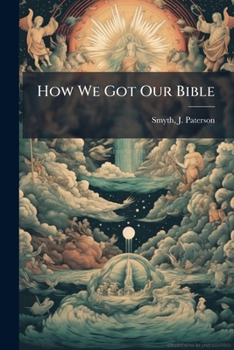
How We Got Our Bible

Select Format
Select Condition 
Book Overview
"How We Got Our Bible" by J. Paterson Smyth explores the fascinating history of the Bible, tracing its development from ancient manuscripts to the printed volumes we know today. Smyth delves into the origins of the Old and New Testaments, examining the processes of selection, translation, and preservation that have shaped the sacred texts. He clarifies complex issues such as the formation of the Biblical canon and the challenges of textual criticism, making them accessible to a general audience.
Originally published in 1906, this book provides valuable insights into the historical and cultural contexts that influenced the Bible's creation and transmission. Smyth's work reflects early 20th-century perspectives on biblical scholarship, offering a unique window into the evolving understanding of scripture. "How We Got Our Bible" remains a relevant resource for anyone interested in the history, authority, and enduring significance of the Bible.
This work has been selected by scholars as being culturally important, and is part of the knowledge base of civilization as we know it. This work was reproduced from the original artifact, and remains as true to the original work as possible. Therefore, you will see the original copyright references, library stamps (as most of these works have been housed in our most important libraries around the world), and other notations in the work.
This work is in the public domain in the United States of America, and possibly other nations. Within the United States, you may freely copy and distribute this work, as no entity (individual or corporate) has a copyright on the body of the work.
As a reproduction of a historical artifact, this work may contain missing or blurred pages, poor pictures, errant marks, etc. Scholars believe, and we concur, that this work is important enough to be preserved, reproduced, and made generally available to the public. We appreciate your support of the preservation process, and thank you for being an important part of keeping this knowledge alive and relevant.
Customer Reviews
ThriftBooks ® and the ThriftBooks ® logo are registered trademarks of Thrift Books Global, LLC
