


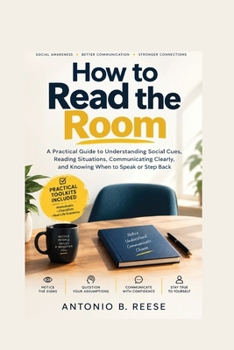
How to Read the Room: A Practical Guide to Understanding Social Cues, Reading Situations, Communicating Clearly, and Knowing When to Speak or Step Back

Have you ever walked into a room and immediately felt that something was different?
Maybe the conversation suddenly became quieter. Someone gave you a short answer. A person avoided eye contact. People laughed, but you were not sure why. Someone seemed distant, and before you knew it, your mind was asking:
Did I do something wrong? Are they upset with me? Do they not like me? Should I say something-or stay quiet?
Reading the room is not about becoming a mind reader.
It is about learning how to notice what is actually happening without allowing assumptions, anxiety, or overthinking to decide what everything means.
How to Read the Room is a practical guide to becoming more socially aware, observant, flexible, and confident in everyday interactions. It shows you how to recognize social cues while remembering that a single expression, silence, delayed response, or change in tone rarely tells the whole story.
Inside, you'll learn how to:
- Separate what you actually observe from the story your mind creates around it- Recognize changes in tone, timing, behavior, body language, and atmosphere- Understand the difference between a signal and an assumption- Consider context and personal patterns before interpreting someone's behavior- Handle rooms that suddenly feel tense, awkward, quiet, or uncomfortable- Know when to speak, when to wait, and when to simply observe- Stop automatically assuming that other people's moods and reactions are about you- Deal with mixed signals without endlessly trying to decode hidden meanings- Ask clear, respectful questions instead of filling gaps with assumptions- Stay socially aware without becoming overly focused on other people's approval- Protect your boundaries while still being considerate of the people around you- Practice these skills until thoughtful social awareness becomes more naturalYou'll also find practical exercises and quick-reference tools designed to help you apply these ideas in real situations-not just understand them in theory.
Whether you're navigating conversations at work, family gatherings, friendships, dating, unfamiliar social situations, or difficult discussions, this book will help you slow down your interpretation, gather better information, and choose your response more deliberately.
Because being socially aware does not mean knowing what everyone is thinking.
It means being able to notice what is happening, recognize what you don't know, ask when clarification is needed, adapt when appropriate, and remain grounded in who you are.
You don't need to master every room. You need to become someone who can walk into any room without immediately losing yourself in what everyone else might be thinking.
If you are ready to stop overanalyzing every expression, silence, and reaction-and start navigating social situations with greater clarity and confidence-How to Read the Room gives you the practical framework to begin.
Customer Reviews
ThriftBooks ® and the ThriftBooks ® logo are registered trademarks of Thrift Books Global, LLC
