


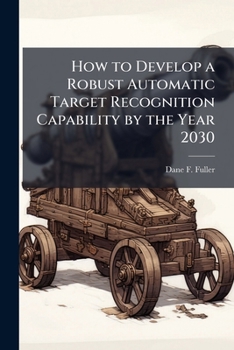
How to Develop a Robust Automatic Target Recognition Capability by the Year 2030

This research paper illustrates how automatic target recognition (ATR) technology is poised to grow dramatically over the next decade and how a robust operational ATR capability is expected to be attainable by the year 2030. As new ATR systems begin to emerge, DoD leaders and operators must be informed on how best to guide ATR development and integration into military forces. In support of this goal, the paper reviews the current status of ATR technology and predicts its future by analyzing trend data derived from various sources. A key source of evidence lies in data gathered by the author through a 2008 ATR technology assessment survey taken by experts in the field of ATR. Based upon analysis of the relevant data, the paper concludes with several recommendations which provide a call to action by DoD leadership. Some novel recommendations entail the training and sustainment of ATR systems as learning machines. Finally, the paper closes with suggestions for further research.
This work has been selected by scholars as being culturally important, and is part of the knowledge base of civilization as we know it. This work was reproduced from the original artifact, and remains as true to the original work as possible. Therefore, you will see the original copyright references, library stamps (as most of these works have been housed in our most important libraries around the world), and other notations in the work.
This work is in the public domain in the United States of America, and possibly other nations. Within the United States, you may freely copy and distribute this work, as no entity (individual or corporate) has a copyright on the body of the work.
As a reproduction of a historical artifact, this work may contain missing or blurred pages, poor pictures, errant marks, etc. Scholars believe, and we concur, that this work is important enough to be preserved, reproduced, and made generally available to the public. We appreciate your support of the preservation process, and thank you for being an important part of keeping this knowledge alive and relevant.
Customer Reviews
ThriftBooks® and the ThriftBooks® logo are registered trademarks of Thrift Books Global, LLC
