


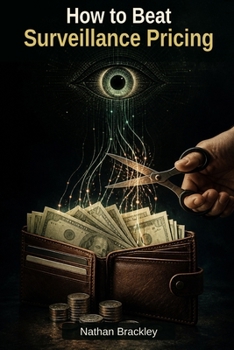
How to Beat Surveillance Pricing

You are not paying the sticker price. Almost nobody is anymore.
Surveillance pricing is the practice of using your personal data, your location, your device, your browsing and buying history, even your phone's battery level, to estimate the most you will pay and to charge you accordingly. It is personalized pricing, dynamic pricing, and algorithmic pricing working together, fed by data brokers and loyalty profiles, and it is designed to be invisible. The whole system works better for the company when you do not know it is there.
Now you do. This book is a clear, practical guide to how surveillance pricing actually works and, more importantly, how to beat it. It draws on the real evidence: the Federal Trade Commission's surveillance pricing study, the Consumer Reports investigations into Instacart, Uber, and Lyft, the Kroger loyalty profiles, and the patents in which these companies describe what they can do in their own words.
Most advice on this subject is wrong, and following it costs you money. Clearing your cookies accomplishes nothing. Browsing anonymously gets you quoted the highest price, not the lowest. Using a VPN helps in one narrow situation and backfires in most. This book explains why, and sets out what genuinely reduces what you pay.
The method is built on a single idea: price discrimination reads your behavior, so change what your behavior tells it. You will learn how to separate a browsing identity from a buying identity, how to build a shopping profile that signals price sensitivity rather than desperation, and how to apply this shop by shop. Every major category is covered in its own chapter: groceries and loyalty cards, ride-hailing and food delivery apps, hotels and airline flights, electronic shelf labels, data brokers, and the privacy and deletion rights that genuinely change what companies can do with your personal information.
Along the way you will see why the intuitions everyone repeats are wrong. Why anonymity is the single most expensive way to shop. Why a loyalty card can save you money and cost you money at the same time, and how to tell which. Why hotels hide their best price from strangers and reveal it only to members. Why airline fares behave nothing like hotel rates, so the same trick helps with one and does nothing for the other.
You will also learn how to detect surveillance pricing yourself, with a thirty-second test anybody can run at home, and how to read the new disclosures appearing under laws like New York's Algorithmic Pricing Disclosure Act, which now requires some companies to tell you when a price was set by an algorithm using your personal data.
None of it is illegal. None of it requires technical skill or special software. And the final chapter reveals the one move that has already forced a major national platform to abandon a pricing practice in just thirteen days, a move that cost the people behind it nothing more than a phone and an ordinary shopping trip.
If you buy groceries, book travel, order rides, or shop online, you are already a target of surveillance pricing. This book is how you stop being an easy one, and how you pay less than the system wants you to.
Customer Reviews
ThriftBooks ® and the ThriftBooks ® logo are registered trademarks of Thrift Books Global, LLC
