


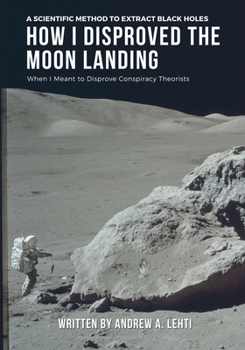
How I Disproved the Moon Landing: When I Meant to Disprove Conspiracy Theorists

Challenging accepted narratives-whether in science, mathematics, or culture-inevitably provokes a response both immediate and revealing. My examination of NASA's lunar photographs was never about skepticism or personal conviction. It was an exercise in scrutiny, a means to explore cognitive bias and resistance to new perspectives. Yet what I uncovered was not just evidence supporting the Moon landings, but a deeper insight into how society reacts when authority is questioned.
Patterns emerged: rigorous analysis was not met with reasoned discussion but with hostility, dismissal, and suppression. Forums that claimed to champion open inquiry-academic spaces, digital platforms, institutions built on intellectual freedom-routinely silenced my findings, sometimes within seconds. Any attempt to analyze NASA's imagery through forensic critique was quickly obstructed-buried by algorithms, ridiculed, or labeled misinformation. The uniformity and speed of these reactions suggested something beyond skepticism: a deliberate effort to discredit inquiry itself. This is what I now call infamication-the contamination of credible investigation by forcing it into association with absurdity.
Ironically, my focus on NASA was incidental. I set out to examine the mechanics of human reasoning and systemic bias. Yet rather than encountering debate or counterargument, I found an outsized resistance that revealed a deeper intellectual affliction. Even in mathematics, a field built on pure logic, departures from convention are often dismissed-not by proof, but by unquestioned adherence to tradition. This reflexive rejection of challenge is not limited to space exploration; it is a broader failure of thought. When ideas become institutions, when knowledge hardens into doctrine, the act of questioning itself is treated as a threat.
Customer Reviews
ThriftBooks® and the ThriftBooks® logo are registered trademarks of Thrift Books Global, LLC
