


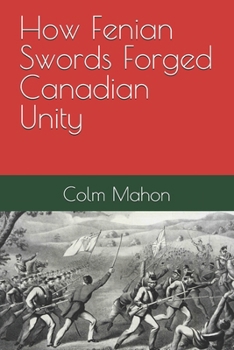
How Fenian Swords Forged Canadian Unity

How Fenian Swords Forged Canadian Unity
The Fenian Raids (1866-1871) were the most ambitious and militarily competent external threat faced by British North America in the period immediately preceding Confederation. The organization, founded by John O'Mahony and others in 1858, drew its operational strength from the mass migration and resulting pool of combat-hardened veterans of the U.S. Civil War. This capability was leveraged by the Roberts Wing after its successful strategic coup against O'Mahony, prioritizing the Canadian invasion plan.
Although the Fenians achieved a tactical victory at the Battle of Ridgeway, their operation failed its strategic objective, suffering 24 men killed and 48 wounded, with 59 captured across the full campaign. The U.S. government's subsequent political expediency in pardoning convicted Fenians underscored Washington's complex diplomatic relationship with London, utilizing the Irish-American vote as an unofficial lever of pressure.
Most consequentially, the incursions acted as an unintended nation-builder, providing the existential urgency required to accelerate Canadian Confederation. Conversely, the legacy of the raids within Canada was one of increased sectarian tension. The raids were weaponized by the dominant Anglo-Protestant culture to associate Irish Catholics with inherent disloyalty and Fenian treason, thereby institutionalizing prejudice and structurally marginalizing Irish Catholics within the nascent Dominion of Canada. Following the early 1870s, the importance of the Fenian Brotherhood diminished, with the revolutionary mantle passing to organizations like Clan na Gael.
Related Subjects
HistoryCustomer Reviews
ThriftBooks ® and the ThriftBooks ® logo are registered trademarks of Thrift Books Global, LLC
