


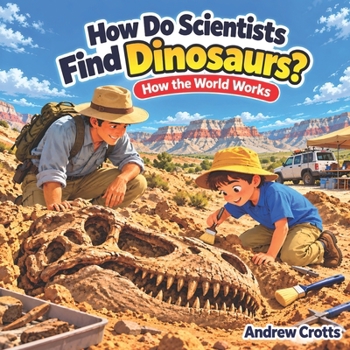
How Do Scientists Find Dinosaurs?: How the World Works

Have you ever seen a dinosaur skeleton in a museum and wondered how scientists found it after millions of years?
Dinosaurs disappeared long ago, but they left behind incredible clues hidden inside the Earth. How Do Scientists Find Dinosaurs? takes curious young readers into the exciting world of paleontology to discover how scientists find, uncover, protect, and study dinosaur fossils.
Kids will learn how bones can become fossils, how layers of sand and mud turn into rock around them, and how wind and rain can slowly expose fossils that have been buried for millions of years.
Then they'll join paleontologists in the field as they search ancient rock layers for fossil clues, carefully record where bones are found, take photographs and measurements, and slowly dig around fossils using small tools.
Young readers will discover how delicate fossils are protected inside plaster jackets for their journey to a museum laboratory, where fossil preparators carefully remove the remaining rock and repair broken pieces.
Finally, they'll see how scientists use bones, teeth, footprints, and rock layers to figure out what kind of dinosaur they found, when it lived, what it ate, and how it moved.
Packed with colorful illustrations and easy-to-understand explanations, How Do Scientists Find Dinosaurs? turns a dinosaur discovery into an exciting scientific adventure from the ground to the museum
Perfect for curious kids who love dinosaurs, fossils, paleontology, science, digging, and discovering how the world works
Part of the How the World Works series-educational books that reveal the amazing people, machines, and systems behind the world we see every day.
Customer Reviews
ThriftBooks ® and the ThriftBooks ® logo are registered trademarks of Thrift Books Global, LLC
