


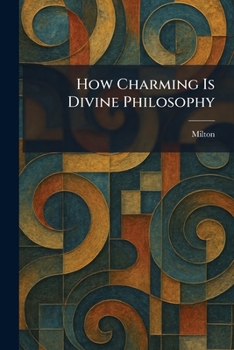
How Charming Is Divine Philosophy

"How Charming Is Divine Philosophy" presents a compelling selection of the intellectual and spiritual reflections of John Milton, one of the most influential figures in the history of English literature. Known primarily for his epic masterpieces, Milton's work here delves into the intersections of reason, faith, and the pursuit of wisdom. The title, drawn from his celebrated masque "Comus", encapsulates the author's belief in the profound beauty and restorative power of philosophical inquiry.
This collection showcases Milton's mastery of language and his deep engagement with the classical and theological traditions of his time. Readers will find a rich tapestry of thought exploring the nature of virtue, the governance of the soul, and the divine order of the universe. From his evocative poetry to his rigorous prose, Milton's voice remains a testament to the enduring human quest for truth. This volume serves as an essential introduction to the moral and philosophical framework that underpins the greatest works of the 17th century, offering timeless insights into the human condition and the divine philosophy that guides it.
This work has been selected by scholars as being culturally important, and is part of the knowledge base of civilization as we know it. This work was reproduced from the original artifact, and remains as true to the original work as possible. Therefore, you may see the original copyright references, library stamps (as most of these works have been housed in our most important libraries around the world), and other notations in the work.
This work is in the public domain in the United States of America, and possibly other nations. Within the United States, you may freely copy and distribute this work, as no entity (individual or corporate) has a copyright on the body of the work.
As a reproduction of a historical artifact, this work may contain missing or blurred pages, poor pictures, errant marks, etc. Scholars believe, and we concur, that this work is important enough to be preserved, reproduced, and made generally available to the public. We appreciate your support of the preservation process, and thank you for being an important part of keeping this knowledge alive and relevant.
Related Subjects
Literary Literary Criticism & Collections Literature Literature & Fiction Philosophy PoetryCustomer Reviews
ThriftBooks ® and the ThriftBooks ® logo are registered trademarks of Thrift Books Global, LLC
