


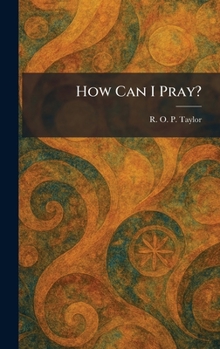
How Can I Pray?

"How Can I Pray?" is a thoughtful and accessible guide designed to help individuals deepen their spiritual life through the practice of prayer. Written with clarity and pastoral warmth, R.O.P. Taylor addresses the common hurdles and questions that believers face when attempting to establish or maintain a meaningful dialogue with the divine. The work explores the fundamental nature of prayer, moving beyond rote recitation to encourage a more personal and transformative engagement with faith.
The book provides practical advice on how to structure one's devotional time, the importance of sincerity, and the various forms prayer can take-from petition and intercession to thanksgiving and silent contemplation. By demystifying the act of praying, Taylor offers readers a roadmap for spiritual growth that remains highly relevant for modern seekers. "How Can I Pray?" serves as an invaluable resource for anyone seeking to strengthen their faith, find comfort in times of trouble, or cultivate a more disciplined and enriching interior life. This work stands as a significant contribution to 20th-century devotional literature, emphasizing the universal human need for connection with the sacred.
This work has been selected by scholars as being culturally important, and is part of the knowledge base of civilization as we know it. This work was reproduced from the original artifact, and remains as true to the original work as possible. Therefore, you may see the original copyright references, library stamps (as most of these works have been housed in our most important libraries around the world), and other notations in the work.
This work is in the public domain in the United States of America, and possibly other nations. Within the United States, you may freely copy and distribute this work, as no entity (individual or corporate) has a copyright on the body of the work.
As a reproduction of a historical artifact, this work may contain missing or blurred pages, poor pictures, errant marks, etc. Scholars believe, and we concur, that this work is important enough to be preserved, reproduced, and made generally available to the public. We appreciate your support of the preservation process, and thank you for being an important part of keeping this knowledge alive and relevant.
Customer Reviews
ThriftBooks ® and the ThriftBooks ® logo are registered trademarks of Thrift Books Global, LLC
