


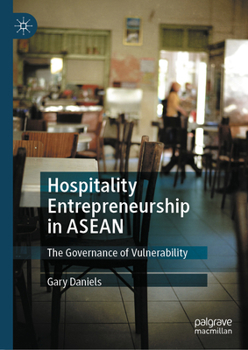
Hospitality Entrepreneurship in ASEAN: The Governance of Vulnerability

This research-led book rethinks hospitality entrepreneurship in ASEAN through the concept of the governance of vulnerability. It examines how founder-led micro, small and medium-sized enterprises make ventures workable and sustain continuity amid uneven access to finance, labour, regulation, platforms, property and institutional support. Drawing on founder interviews alongside policy and government documents, industry evidence, media accounts and contemporary scholarship, the book connects lived enterprise practice with the wider structures that shape it. Rather than treating growth, formalisation or technological adoption as self-evident measures of success, it asks how entrepreneurial arrangements distribute work, risk, control and exposure among founders, households, workers and other actors. Across fourteen chapters, the analysis develops distinctive concepts including venture assembly, low organisational and financial slack, visibility work and dignified non-scaling, culminating in a distributional framework for evaluating enterprise through viability, bounded control, dignity and liveability.
Customer Reviews
ThriftBooks ® and the ThriftBooks ® logo are registered trademarks of Thrift Books Global, LLC
