


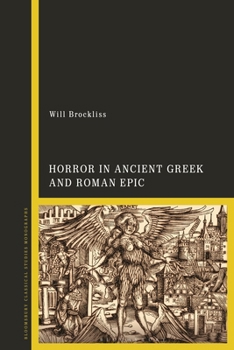
Horror in Ancient Greek and Roman Epic
No Customer Reviews

By demonstrating the importance of horrific motifs to Greek and Roman epic, this book challenges existing conceptions of what an epic poem is and of what it means to engage with such a text. Taking the reader through both canonical and lesser-known ancient epic, Brockliss argues that contrary to conventional readings, macabre themes are central to these texts. These poems dwell as much if not more on foul displays of human physicality as on depictions of a sublime heroism, prioritize psychological disturbance over tragic suffering, and set the intrusions of unquiet ghosts in tension with celebrations of the safely dead.
Alongside happy recollections of past glories, ancient epics offer readers a shocking and immersive experience that confronts them with the bare facts of human physiques and psychologies. Rather than focusing narrowly on the eminent achievements of a few, this book comprehensively demonstrates how horror in epic offers an egalitarian portrait of what makes us human.Format:Hardcover
Language:English
ISBN:1350466786
ISBN13:9781350466784
Release Date:January 2027
Publisher:Bloomsbury Academic
Length:288 Pages
Weight:1.00 lbs.
Dimensions:1.0" x 6.1" x 9.2"
Customer Reviews
0 rating
Copyright © 2026 Thriftbooks.com
Terms of Use | Privacy Policy | Do Not Sell/Share My Personal Information | Cookie Policy | Cookie Preferences | Accessibility Statement
ThriftBooks ® and the ThriftBooks ® logo are registered trademarks of Thrift Books Global, LLC
ThriftBooks ® and the ThriftBooks ® logo are registered trademarks of Thrift Books Global, LLC
