


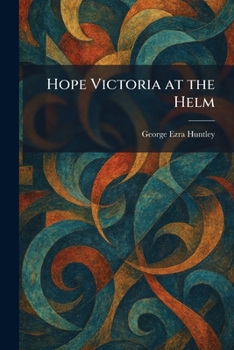
Hope Victoria at the Helm

Select Format
Select Condition 
Book Overview
"Hope Victoria at the Helm" is an inspiring tale of leadership, spiritual growth, and the development of character. The story follows the protagonist, Hope Victoria, as she navigates the complexities of guiding others and fostering community through faith and determination. The narrative emphasizes the importance of moral conviction and the transformative power of a positive, dedicated spirit in the face of responsibility.
As Hope takes the helm, readers are treated to a story that combines ethical instruction with engaging storytelling. This work highlights the vital role of youth in communal life and the personal strength required to lead others toward a common goal. Through various trials and triumphs, the book explores themes of perseverance, integrity, and the practical application of spiritual principles in daily life. George Ezra Huntley's narrative remains a compelling example of early 20th-century literature designed to uplift and instruct, offering a window into the values and educational philosophies of its era. It is a classic representation of literature meant to provide both entertainment and a roadmap for living a life of purpose and service.
This work has been selected by scholars as being culturally important, and is part of the knowledge base of civilization as we know it. This work was reproduced from the original artifact, and remains as true to the original work as possible. Therefore, you may see the original copyright references, library stamps (as most of these works have been housed in our most important libraries around the world), and other notations in the work.
This work is in the public domain in the United States of America, and possibly other nations. Within the United States, you may freely copy and distribute this work, as no entity (individual or corporate) has a copyright on the body of the work.
As a reproduction of a historical artifact, this work may contain missing or blurred pages, poor pictures, errant marks, etc. Scholars believe, and we concur, that this work is important enough to be preserved, reproduced, and made generally available to the public. We appreciate your support of the preservation process, and thank you for being an important part of keeping this knowledge alive and relevant.
Customer Reviews
ThriftBooks ® and the ThriftBooks ® logo are registered trademarks of Thrift Books Global, LLC
