


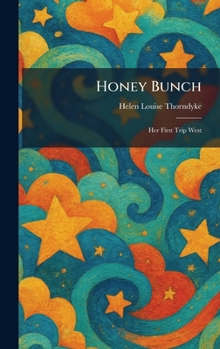

"Honey Bunch: Her First Trip West" is a charming installment in the beloved children's series by Helen Louise Thorndyke. In this delightful tale, the precocious and curious young protagonist, Honey Bunch, embarks on an exciting journey far from home to experience the wonders of the American West. As she travels by train across the vast landscapes of the United States, Honey Bunch encounters new friends, observes the changing scenery, and learns about the diverse life found beyond her familiar surroundings.
The story captures the innocence and wonder of childhood discovery, making it an ideal read for young children. Through Honey Bunch's eyes, readers are introduced to the thrill of travel and the joy of exploring new frontiers. The narrative emphasizes family values, polite manners, and the simple pleasures of early 20th-century life. "Honey Bunch: Her First Trip West" stands as a classic example of early juvenile series fiction, offering a nostalgic glimpse into a bygone era while remaining a wholesome and engaging adventure for contemporary young readers.
This work has been selected by scholars as being culturally important, and is part of the knowledge base of civilization as we know it. This work was reproduced from the original artifact, and remains as true to the original work as possible. Therefore, you may see the original copyright references, library stamps (as most of these works have been housed in our most important libraries around the world), and other notations in the work.
This work is in the public domain in the United States of America, and possibly other nations. Within the United States, you may freely copy and distribute this work, as no entity (individual or corporate) has a copyright on the body of the work.
As a reproduction of a historical artifact, this work may contain missing or blurred pages, poor pictures, errant marks, etc. Scholars believe, and we concur, that this work is important enough to be preserved, reproduced, and made generally available to the public. We appreciate your support of the preservation process, and thank you for being an important part of keeping this knowledge alive and relevant.
Customer Reviews
ThriftBooks ® and the ThriftBooks ® logo are registered trademarks of Thrift Books Global, LLC
