


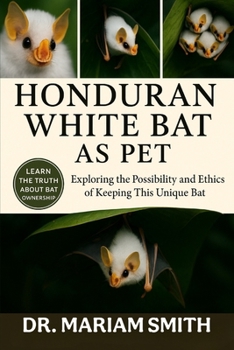
Honduran White Bat as Pet: Exploring the Possibility and Ethics of Keeping This Unique Bat

Introduction to the Honduran white bat, covering its overview and significance:
Introduction to the Honduran White Bat
The Honduran white bat (*Ectophylla alba*) is a remarkable and enchanting species that has captured the fascination of scientists, nature enthusiasts, and animal lovers alike.
Known for its distinctive snow-white fur and unique lifestyle, this small bat species stands out as one of the most visually striking members of the bat family.
Despite its delicate appearance, the Honduran white bat plays a significant role in the ecosystems it inhabits, making it both an ecological treasure and a symbol of the extraordinary diversity found in tropical rainforests.
Discovery and Naming
The Honduran white bat was first described scientifically in 1892 by the American zoologist Gerrit Smith Miller Jr., after whom many early taxonomic explorations of Central American mammals are credited. Its name, *Ectophylla alba*, literally means "white outside leaf," referring to the bat's unique roosting behavior under large leaves and its striking white coloration.
This combination of traits not only sets it apart visually but also behaviorally from other bats, contributing to its mystique and intrigue.
Physical Appearance
One of the most captivating features of the Honduran white bat is its pure white fur, which contrasts sharply with the green environment of the rainforest.
Customer Reviews
ThriftBooks ® and the ThriftBooks ® logo are registered trademarks of Thrift Books Global, LLC
