


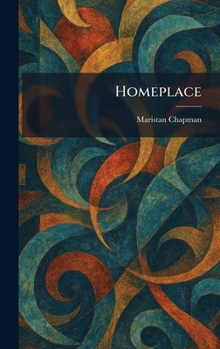
Homeplace

"Homeplace" is a compelling work of American regional fiction set deep within the Cumberland Mountains of Tennessee. Written by Maristan Chapman, this novel captures the essence of Appalachian life during the early 20th century, focusing on the inhabitants of the fictional community of Glen Hazard.
The story follows the journey of Fayre Jones, a young man who yearns for stability and a sense of belonging in the rugged landscape of his ancestors. As he navigates the complexities of mountain society and seeks to establish a home of his own, the narrative explores the deep-rooted traditions, unique dialects, and enduring spirit of the mountain folk. Chapman's prose is celebrated for its authentic portrayal of regional culture, utilizing the rhythmic and colorful language of the Southern highlands to bring the setting to life.
Through its focus on themes of identity, land, and community, "Homeplace" provides a nuanced look at a way of life that remains tied to the cycles of nature and the bonds of kinship. This novel stands as a significant contribution to the Appalachian literary tradition, offering readers an immersive experience into the heart of the Tennessee mountains and the timeless human quest for a place to call home.
This work has been selected by scholars as being culturally important, and is part of the knowledge base of civilization as we know it. This work was reproduced from the original artifact, and remains as true to the original work as possible. Therefore, you may see the original copyright references, library stamps (as most of these works have been housed in our most important libraries around the world), and other notations in the work.
This work is in the public domain in the United States of America, and possibly other nations. Within the United States, you may freely copy and distribute this work, as no entity (individual or corporate) has a copyright on the body of the work.
As a reproduction of a historical artifact, this work may contain missing or blurred pages, poor pictures, errant marks, etc. Scholars believe, and we concur, that this work is important enough to be preserved, reproduced, and made generally available to the public. We appreciate your support of the preservation process, and thank you for being an important part of keeping this knowledge alive and relevant.
Customer Reviews
ThriftBooks ® and the ThriftBooks ® logo are registered trademarks of Thrift Books Global, LLC
