


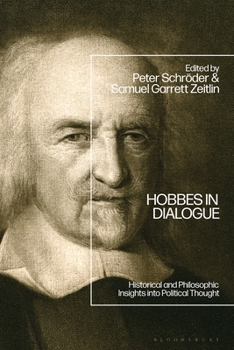
Hobbes in Dialogue: Historical and Philosophic Insights Into Political Thought

Bringing together expert contributors across a range of disciplines from the United
Kingdom, the United States and Europe, Hobbes in Dialogue shines a much-needed
light on the political and philosophical dialogues of Thomas Hobbes.
Hobbes in Dialogue is divided into three major parts which address, first, earlier
dialogues which shaped the background to Hobbes's own; second, Hobbes's philosophic
dialogues and the wider context of Hobbes's philosophy in relation to the dialogue form,
and, finally, critics of Hobbes's philosophy who expressed their critiques in dialogue form.
The various chapters explore how the dialogue form allowed Hobbes, as one of the
eminent thinkers who shaped early modern political thought, to present his political
philosophy in a different guise. How do Hobbes's dialogues tally with his other often more
systematic works? Do they complement Hobbes's earlier writings? Does Hobbes expect
the readers of his dialogues to know about his key positions and arguments as notably
developed in De Cive and Leviathan? These are some of the leading questions Hobbes
in Dialogue considers in a collection that reveals much about Hobbes's thought and,
more broadly, the intellectual history of Europe in the early modern age.
Customer Reviews
ThriftBooks ® and the ThriftBooks ® logo are registered trademarks of Thrift Books Global, LLC
