


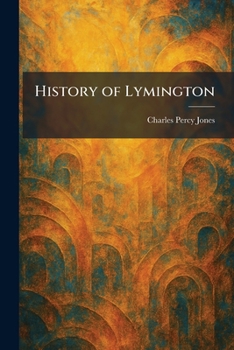
History of Lymington

"History of Lymington" by Charles Percy Jones offers a comprehensive exploration of the rich historical tapestry of this ancient English seaport. Situated on the southern coast within the New Forest region, Lymington's development is traced through its various stages of growth, from its early origins to its establishment as a notable borough and maritime hub.
This meticulous study examines the town's social, political, and economic evolution. Readers will find detailed accounts of local governance, the influence of the salt industry, and the town's significance as a port and center for yachting. Jones delves into the historical records to bring forth insights into the lives of its inhabitants, the architectural heritage of its streets, and the local traditions that have shaped the community over the centuries.
As a valuable resource for genealogists and local historians, "History of Lymington" preserves the unique character of this Hampshire town. It serves as an essential chronicle for anyone interested in the local history of the South Coast of England and the enduring legacy of Lymington's maritime and civic identity.
This work has been selected by scholars as being culturally important, and is part of the knowledge base of civilization as we know it. This work was reproduced from the original artifact, and remains as true to the original work as possible. Therefore, you may see the original copyright references, library stamps (as most of these works have been housed in our most important libraries around the world), and other notations in the work.
This work is in the public domain in the United States of America, and possibly other nations. Within the United States, you may freely copy and distribute this work, as no entity (individual or corporate) has a copyright on the body of the work.
As a reproduction of a historical artifact, this work may contain missing or blurred pages, poor pictures, errant marks, etc. Scholars believe, and we concur, that this work is important enough to be preserved, reproduced, and made generally available to the public. We appreciate your support of the preservation process, and thank you for being an important part of keeping this knowledge alive and relevant.
Customer Reviews
ThriftBooks ® and the ThriftBooks ® logo are registered trademarks of Thrift Books Global, LLC
