


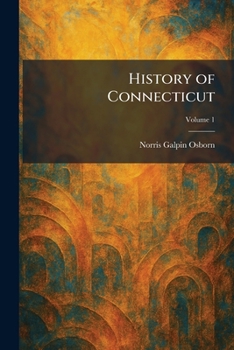
History of Connecticut

"History of Connecticut" offers a comprehensive and scholarly exploration of the foundational years and development of the Constitution State. In this first volume, edited by Norris Galpin Osborn, the narrative delves into the early colonial period, tracing the arrival of European settlers and the establishment of the early river towns that would define the region's character. The work provides an in-depth look at the political, social, and economic factors that shaped the Connecticut Colony, examining the governance, religious influences, and early legal frameworks that earned the state its distinctive nickname.
Through meticulous research and detailed historical analysis, this volume captures the spirit of early New England life. It covers significant events ranging from interactions with Indigenous populations to the internal struggles for autonomy and the growth of local institutions. As a seminal historical account, it serves as an essential resource for those interested in the heritage of Connecticut and the broader history of the United States. Readers will find a wealth of information regarding the prominent figures and pivotal moments that laid the groundwork for the state's future. This volume is an invaluable addition to any collection focusing on American regional history and the colonial experience.
This work has been selected by scholars as being culturally important, and is part of the knowledge base of civilization as we know it. This work was reproduced from the original artifact, and remains as true to the original work as possible. Therefore, you may see the original copyright references, library stamps (as most of these works have been housed in our most important libraries around the world), and other notations in the work.
This work is in the public domain in the United States of America, and possibly other nations. Within the United States, you may freely copy and distribute this work, as no entity (individual or corporate) has a copyright on the body of the work.
As a reproduction of a historical artifact, this work may contain missing or blurred pages, poor pictures, errant marks, etc. Scholars believe, and we concur, that this work is important enough to be preserved, reproduced, and made generally available to the public. We appreciate your support of the preservation process, and thank you for being an important part of keeping this knowledge alive and relevant.
Related Subjects
HistoryCustomer Reviews
ThriftBooks ® and the ThriftBooks ® logo are registered trademarks of Thrift Books Global, LLC
