


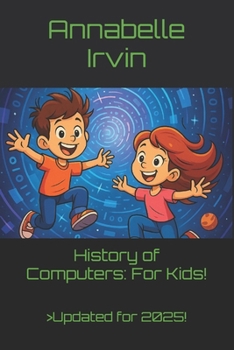
History of Computers: For Kids! (Updated for 2025!)

A Fun and Friendly Guide to the Amazing World of Computers - Now Updated for 2025
Get ready to dive into the wonderful world of computers in this fun, kid-friendly nonfiction book made just for curious minds like yours
From the very first tools people used to count - like the abacus - all the way to the amazing smartphones and smart computers we have today, this book takes you on a thrilling journey through the history of technology.
You'll discover awesome inventions from the past, like giant mechanical calculators and Charles Babbage's Difference Engine and Analytical Engine. These early machines helped inventors dream up the modern computer Then, you'll explore how clever people built some of the very first personal computers, such as the Kenbak-1, the Apple II, and the IBM PC - machines that helped bring computers into homes and schools.
As you turn the pages, you'll also learn about the invention of the graphical user interface - a fancy way to say "using pictures and windows instead of just typing words " You'll meet Windows 1.0, one of the first operating systems to use this feature, and find out how it helped computers become easier for everyone to use.
The story doesn't stop there This book zooms through the 2000s when things got even more exciting with the rise of the Internet, mobile phones, and tablets. You'll also see how cloud computing made it possible to store and access things online - almost like having a magical backpack you can open from anywhere
And what about the future? In the 2020s and beyond, artificial intelligence (AI) has taken center stage You'll read about cool AI tools like ChatGPT from OpenAI, Gemini from Google, and Meta AI, and how they help people write stories, answer questions, and even have conversations - just like talking to a super-smart robot friend
Whether you're excited by the early days of invention or dreaming about the future of technology, this colorful and cheerful book is packed with facts, fun, and inspiration to get your imagination buzzing.
Updated for 2025, this is your perfect guide to the past, present, and future of computing - and who knows? Maybe one day you'll invent the next big thing
Featuring the following topics: The AbacusThe Mathematical CalculatorBabbage's Difference EngineBabbage's Analytical EngineThe ColossusThe ENIACThe Kenbak-1The Apple IIThe IBM PCThe Apple LisaWindows 1.0The 1990'sThe 2000'sThe 2010'sThe 2020's
Customer Reviews
ThriftBooks ® and the ThriftBooks ® logo are registered trademarks of Thrift Books Global, LLC
