


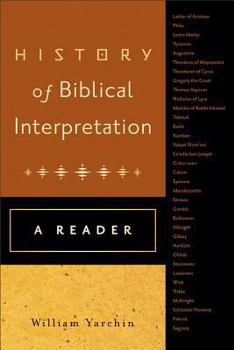
History of Biblical Interpretation: A Reader

Select Format
Select Condition 
Book Overview
What questions do interpreters ask of Scripture and how have those questions changed over time? History of Biblical Interpretation starts at 150 BCE and moves to the present in exploring the major developments and principal approaches to interpreting the Bible. Thirty-four chapters survey the most significant methods and provide introductions to the prominent people who exemplify them. Each chapter also presents an original document that demonstrates this person's interpretational approach and includes a reference bibliography for further reading. Whether used as a textbook or in individual study, this excellent introduction to the history of biblical interpretation will open new doors for students of the Bible, theology, and church history.
Format:Paperback
Language:English
ISBN:0801039800
ISBN13:9780801039805
Release Date:April 2011
Publisher:Baker Academic
Length:474 Pages
Weight:1.76 lbs.
Dimensions:1.3" x 6.0" x 8.7"
Customer Reviews
2 ratings
A Good Book
Published by Thriftbooks.com User , 19 years ago
For my advanced hermeneutics class, we read through Yarchin's book. It was a clear and helpful guide through the maze of Biblical Interpretation. I recomend it to anyone who wants an understanding of various Biblical interpreters in one volume.
Essential for study of historical biblical exegesis
Published by Thriftbooks.com User , 21 years ago
William Yarchin's History of Biblical Interpretation is a much-needed addition to the study of historical biblical exegesis. It is the only volume dedicated to historical exegesis of which I am aware whose prime concern is allowing the reader to experience the primary sources rather than informing the reader concerning the author's understanding of the primary sources. This does not mean that the reader is left to his or herself without any guidance concerning the primary sources, however. Yarchin gives brief yet complete introductions to each source, setting them in context and guiding the reader concerning themes and perspectives to look for while reading the source. A primary strength of the book is its range. It is relatively short (429 pages of text plus introduction) while covering a span of twenty-two centuries. It is not the case, however, that the compendious nature of the book keeps it from being thorough. While I was unfamiliar with a good portion of the sources (many of which I had never heard of before), I am very familiar with works such as Origen's De Principiis, book IV and Augustine's De Doctrina. Yarchin has identified the heart of these works as I remember them and printed them for the reader. Because of this I feel confident in the assumption that he has done the same with the other works in his book. Another strength of History of Biblical Interpretation is that it is not only dedicated to historical biblical exegesis in the Christian tradition, but pays ample attention to the Jewish tradition of biblical exegesis as well. Since these two traditions share so many of the same texts, a history of biblical interpretation is incomplete without attention to both. Yarchin's commitment to giving attention to both of these traditions not only gives his reader a more well-rounded history of biblical exegesis, but also can contribute to the discovering of ways in which the exegetical traditions of these two religions can inform one another in the future. I was initially disappointed that there was not provided a summary essay at the end of the book. But what I would expect in such an essay is really presented in the introduction. I would strongly suggest anyone who has any interest in the history of biblical interpretation to read Yarchin's History of Biblical Interpretation. It not only provides much of the information one will find in some of the standard introductory texts concerning historical exegesis (although in a different format), but is also the best springboard to delving into more obscure, yet important, texts (which are ignored by most introductions) that I have come into contact with as of yet.
Copyright © 2026 Thriftbooks.com Terms of Use
| Privacy Policy | Do Not
Sell/Share My Personal Information | Cookie Policy | Cookie Preferences | Accessibility Statement
ThriftBooks® and the ThriftBooks® logo are registered trademarks of Thrift Books Global, LLC
ThriftBooks® and the ThriftBooks® logo are registered trademarks of Thrift Books Global, LLC
