


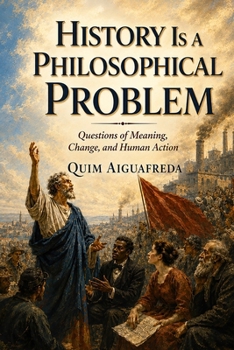
History Is a Philosophical Problem: Questions of Meaning, Change, and Human Action
No Customer Reviews

History looks straightforward until someone asks what it means. Why do empires rise and fall? Are revolutions caused by ideas, material conditions, institutions, individual decisions-or bad weather arriving at an inconvenient moment? Does history move toward progress, repeat itself, or simply acquire a direction when historians begin arranging the evidence? History Is a Philosophical Problem explores the questions hidden inside every account of the past. Moving from providence, progress, and historical materialism to causation, contingency, narrative, memory, colonialism, gender, race, and environmental history, it introduces the thinkers and debates that have shaped how history is understood. Drawing on thinkers such as Hegel, Marx, Nietzsche, Weber, Benjamin, Popper, Foucault, Hayden White, Edward Said, and Reinhart Koselleck, as well as historians including Fernand Braudel, E. P. Thompson, Carlo Ginzburg, Theda Skocpol, and Natalie Zemon Davis, the book uses concrete historical examples to explore how historians establish facts, explain actions, identify causes, shape narratives, recover excluded voices, and judge people who lived under very different conditions. It also examines the major objections raised against these approaches. The past may be finished. The argument about what it means is not.
Format:Paperback
Language:English
ISBN:B0HBNKDPBB
ISBN13:9798189125584
Release Date:July 2026
Publisher:Independently Published
Length:222 Pages
Weight:0.67 lbs.
Dimensions:0.5" x 6.0" x 9.0"
Customer Reviews
0 rating
Copyright © 2026 Thriftbooks.com
Terms of Use | Privacy Policy | Do Not Sell/Share My Personal Information | Cookie Notice | Cookie Preferences | Accessibility Statement
ThriftBooks ® and the ThriftBooks ® logo are registered trademarks of Thrift Books Global, LLC
ThriftBooks ® and the ThriftBooks ® logo are registered trademarks of Thrift Books Global, LLC
