


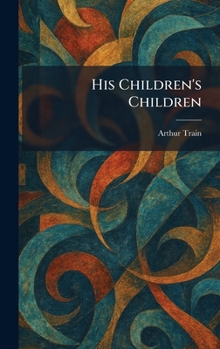
His Children's Children

"His Children's Children" is a compelling multi-generational saga that masterfully captures the evolution of New York's high society at a critical turning point in American history. This sweeping narrative traces the rise and eventual moral fragmentation of the Kayne family across three generations. At the heart of the story is Peter Kayne, the self-made patriarch who built a vast fortune, and his descendants, who must navigate the shifting social tides of the post-World War I era.
As the story moves from the gilded era of the late 19th century into the restless energy of the Jazz Age, Arthur Train explores the inevitable conflict between traditional Victorian values and the newfound freedoms of the 1920s. The novel delves into themes of wealth, social ambition, and the fragility of family legacies. Through the lens of the Kayne family, readers are offered a vivid portrait of an American aristocracy in transition, struggling to maintain its footing in a rapidly modernizing world. "His Children's Children" remains a significant work of early 20th-century social realism, offering a profound look at the American Dream and its consequences.
This work has been selected by scholars as being culturally important, and is part of the knowledge base of civilization as we know it. This work was reproduced from the original artifact, and remains as true to the original work as possible. Therefore, you may see the original copyright references, library stamps (as most of these works have been housed in our most important libraries around the world), and other notations in the work.
This work is in the public domain in the United States of America, and possibly other nations. Within the United States, you may freely copy and distribute this work, as no entity (individual or corporate) has a copyright on the body of the work.
As a reproduction of a historical artifact, this work may contain missing or blurred pages, poor pictures, errant marks, etc. Scholars believe, and we concur, that this work is important enough to be preserved, reproduced, and made generally available to the public. We appreciate your support of the preservation process, and thank you for being an important part of keeping this knowledge alive and relevant.
Customer Reviews
ThriftBooks ® and the ThriftBooks ® logo are registered trademarks of Thrift Books Global, LLC
