


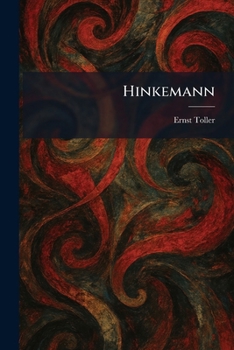
Hinkemann

"Hinkemann" is a powerful and harrowing expressionist tragedy by Ernst Toller, one of the most significant figures of the German revolutionary period. The play centers on Eugen Hinkemann, a veteran who returns from the Great War physically and spiritually broken. Having suffered a permanent injury that leaves him emasculated, Hinkemann finds himself an outcast in a society that prizes virility and strength. As he struggles to find work and maintain his relationship with his wife, Grete, he eventually finds employment as a carnival performer, biting the heads off live animals to entertain a cruel and mocking public.
Through this visceral narrative, Toller explores themes of psychological trauma, the dehumanizing effects of war, and the cold indifference of modern industrial society. "Hinkemann" serves as a scathing critique of a world that discards those it has used and broken, reflecting the deep disillusionment of the post-war era. This work is a masterpiece of expressionist theater, known for its raw emotional intensity and its unflinching look at the human condition in the wake of global conflict. It remains a poignant study of loss, masculinity, and the search for dignity in an undignified age.
This work has been selected by scholars as being culturally important, and is part of the knowledge base of civilization as we know it. This work was reproduced from the original artifact, and remains as true to the original work as possible. Therefore, you may see the original copyright references, library stamps (as most of these works have been housed in our most important libraries around the world), and other notations in the work.
This work is in the public domain in the United States of America, and possibly other nations. Within the United States, you may freely copy and distribute this work, as no entity (individual or corporate) has a copyright on the body of the work.
As a reproduction of a historical artifact, this work may contain missing or blurred pages, poor pictures, errant marks, etc. Scholars believe, and we concur, that this work is important enough to be preserved, reproduced, and made generally available to the public. We appreciate your support of the preservation process, and thank you for being an important part of keeping this knowledge alive and relevant.
Customer Reviews
ThriftBooks ® and the ThriftBooks ® logo are registered trademarks of Thrift Books Global, LLC
