


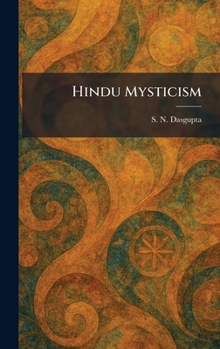
Hindu Mysticism

Select Format
Select Condition 
Book Overview
"Hindu Mysticism" provides a profound and systematic introduction to the rich spiritual traditions of India. Written by the renowned philosopher S. N. Dasgupta, this work explores the diverse forms of mystical experience that have shaped Indian thought for millennia. The text categorizes and examines various stages of mystical development, including sacrificial mysticism, the philosophical mysticism of the Upanishads, Yoga mysticism, Buddhistic mysticism, and the devotional mysticism of the Bhakti movement.
Through a scholarly yet accessible lens, Dasgupta elucidates the core principles and psychological depths of these spiritual paths. Readers will gain insight into the pursuit of ultimate reality, the nature of the self, and the different methods employed by seekers to achieve union with the divine. This book remains an essential resource for anyone interested in the intersection of Eastern philosophy and religious experience, offering a clear map of the complex landscape of Hindu thought. It serves as an authoritative guide to understanding how ancient traditions have conceptualized the human connection to the transcendent and the practical applications of these beliefs in the spiritual life.
This work has been selected by scholars as being culturally important, and is part of the knowledge base of civilization as we know it. This work was reproduced from the original artifact, and remains as true to the original work as possible. Therefore, you may see the original copyright references, library stamps (as most of these works have been housed in our most important libraries around the world), and other notations in the work.
This work is in the public domain in the United States of America, and possibly other nations. Within the United States, you may freely copy and distribute this work, as no entity (individual or corporate) has a copyright on the body of the work.
As a reproduction of a historical artifact, this work may contain missing or blurred pages, poor pictures, errant marks, etc. Scholars believe, and we concur, that this work is important enough to be preserved, reproduced, and made generally available to the public. We appreciate your support of the preservation process, and thank you for being an important part of keeping this knowledge alive and relevant.
Customer Reviews
A little jewel
ThriftBooks ® and the ThriftBooks ® logo are registered trademarks of Thrift Books Global, LLC
