


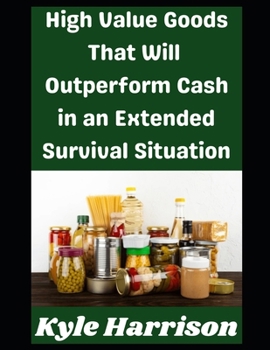
High Value Goods That Will Outperform Cash in an Extended Survival Situation
No Customer Reviews

When the German mark became worthless in the 1920s, people traded cigarettes and coffee and coal. When the Soviet Union collapsed in 1991, the informal barter economy that emerged was so robust and so organized that economists still study it today. When Venezuela's currency went into freefall in the 2010s, the items with the most real world purchasing power were cooking oil, flour, toilet paper, and medicine. When Hurricane Katrina hit New Orleans in 2005 and the city went dark for weeks, the people who had practical goods to offer were the ones who built relationships, got help, and survived with their dignity intact. This is not a new phenomenon. It is not a fringe theory. It is one of the most well documented patterns in all of human economic history. When official currency fails or becomes inaccessible, human beings immediately and instinctively revert to a goods based trading system. And the goods that win in that system are almost never the ones people spend their money on before a crisis. They are the unsexy, practical, deeply useful things that the average American household has almost none of on hand. I have spent years researching this, reading accounts of what people actually traded in historical crises, talking to people who lived through serious economic disruptions in other countries, and cross referencing all of that with the practical realities of modern American life. This book is the result of all of that research and thinking, filtered through the lens of someone who has actually stocked these things, actually used some of them, and actually thought hard about how a barter economy would function in a prolonged American emergency scenario.
Format:Paperback
Language:English
ISBN:B0GNG8JG73
ISBN13:9798248276363
Release Date:February 2026
Publisher:Independently Published
Length:94 Pages
Weight:0.53 lbs.
Dimensions:0.2" x 8.5" x 11.0"
Customer Reviews
0 rating
Copyright © 2026 Thriftbooks.com
Terms of Use | Privacy Policy | Do Not Sell/Share My Personal Information | Cookie Policy | Cookie Preferences | Accessibility Statement
ThriftBooks ® and the ThriftBooks ® logo are registered trademarks of Thrift Books Global, LLC
ThriftBooks ® and the ThriftBooks ® logo are registered trademarks of Thrift Books Global, LLC
