


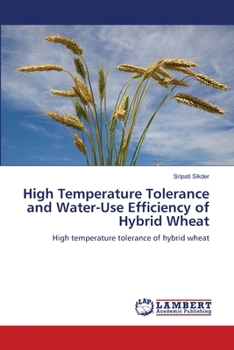
High Temperature Tolerance and Water-Use Efficiency of Hybrid Wheat
No Customer Reviews

Twelve wheat genotypes were grown in pots under controlled and heat stress conditions to assess genetic variation for heat tolerance among studied wheat hybrids and commercial cultivars by evaluating differences in their gas-exchange capacities, water-use-efficiency (WUE), chlorophyll florescence, electrolyte leakage of leaf cell and seed yield. Results showed that genetic variations in net photosynthesis, WUE and other gas exchange characters, chlorophyll fluorescence, electrolyte leakage, seed yield and yield components were very prominent among studied wheat genotypes under heat treatments. Most of the wheat genotypes showed increased net photosynthesis rate, stomata conductance, transpiration rate and intercellular CO2 concentration at heat stress compared to control. But in chlorophyll florescence, transpiration efficiency and WUE maximum wheat genotypes showed decreased values of these parameters at heat stress condition. All wheat genotypes showed greater electrolyte leakages at heat stress condition compared to control condition. Hybrid varieties exhibited better performance in most of the physiological and yield parameters compared to commercial cultivars.
Format:Paperback
Language:English
ISBN:6205500760
ISBN13:9786205500767
Release Date:September 2022
Publisher:LAP Lambert Academic Publishing
Length:56 Pages
Weight:0.21 lbs.
Dimensions:0.1" x 6.0" x 9.0"
Customer Reviews
0 rating
Copyright © 2026 Thriftbooks.com
Terms of Use | Privacy Policy | Do Not Sell/Share My Personal Information | Cookie Policy | Cookie Preferences | Accessibility Statement
ThriftBooks ® and the ThriftBooks ® logo are registered trademarks of Thrift Books Global, LLC
ThriftBooks ® and the ThriftBooks ® logo are registered trademarks of Thrift Books Global, LLC
