


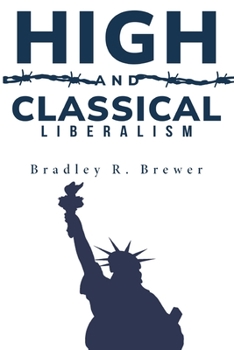
high and classical liberalism

The goal of this chapter is to show that there are various ways to construe liberty. I am particularly interested in the incompatible aspects of different conceptions of liberty, which it is crucial to distinguish and be aware of when attempting to build a theory of liberty for oneself. I discuss the philosophers John Locke and Thomas Hobbes, who both develop influential theories of liberty, in order to show how conceptions of liberty can differ greatly. In this chapter I summarize the conceptions of liberty that Locke and Hobbes present in their respective works. The work that I draw upon for Hobbes is his famous essay, the Leviathan. For Locke I draw upon his ideas from The Second Treatise of Government. Locke and Hobbes build their political philosophies by creating a hypothetical situation called "the state of nature." Locke conceives of a drastically different state of nature than Hobbes, and this difference is the first key difference in understanding why they end up building different theories of liberty. I begin by explaining the differences between Hobbes' and Locke's respective conceptions of the state of nature, the law of nature, and ideal government. I then explain how they ground different conceptions of liberty
Customer Reviews
ThriftBooks ® and the ThriftBooks ® logo are registered trademarks of Thrift Books Global, LLC
