


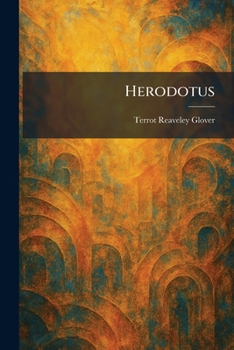
Herodotus

"Herodotus" by T. R. Glover is a seminal scholarly exploration of the life and work of the man often called the "Father of History." Written by a distinguished classicist, this volume offers a deep dive into the mind of the Greek historian, analyzing his unique narrative style and his groundbreaking approach to recording the past. Glover examines the cultural and intellectual landscape of the fifth century BCE, providing readers with a clearer understanding of how Herodotus navigated the boundaries between myth and reality.
The work covers essential themes such as Herodotus's extensive travels, his curiosity about foreign customs, and his monumental account of the Persian Wars. Glover's analysis highlights how Herodotus transformed the oral traditions of his time into a structured inquiry (historie), setting the foundation for Western historical scholarship. This study remains an invaluable resource for students of classics and ancient history, offering a sympathetic yet critical look at a writer whose work remains central to our understanding of the ancient Mediterranean world. Through Glover's insightful commentary, readers gain a renewed appreciation for the complexity and enduring relevance of "The Histories".
This work has been selected by scholars as being culturally important, and is part of the knowledge base of civilization as we know it. This work was reproduced from the original artifact, and remains as true to the original work as possible. Therefore, you may see the original copyright references, library stamps (as most of these works have been housed in our most important libraries around the world), and other notations in the work.
This work is in the public domain in the United States of America, and possibly other nations. Within the United States, you may freely copy and distribute this work, as no entity (individual or corporate) has a copyright on the body of the work.
As a reproduction of a historical artifact, this work may contain missing or blurred pages, poor pictures, errant marks, etc. Scholars believe, and we concur, that this work is important enough to be preserved, reproduced, and made generally available to the public. We appreciate your support of the preservation process, and thank you for being an important part of keeping this knowledge alive and relevant.
Customer Reviews
ThriftBooks ® and the ThriftBooks ® logo are registered trademarks of Thrift Books Global, LLC
