


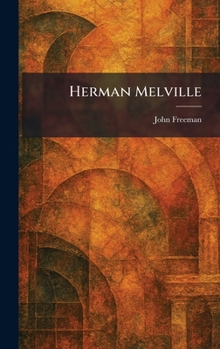
Herman Melville

"Herman Melville" by John Freeman offers an insightful and comprehensive exploration of the life and literary legacy of one of America's most enigmatic and profound authors. This study delves into the psychological and creative forces that shaped the man behind "Moby-Dick", "Typee", and "Billy Budd". Freeman meticulously traces Melville's early years at sea, his rapid rise to literary fame, and the subsequent period of public neglect that defined his later career.
This work provides critical analysis of Melville's major prose and poetry, examining his preoccupation with the struggle between good and evil, the vastness of the natural world, and the complexities of the human spirit. Freeman contextualizes Melville within the broader landscape of 19th-century literature while highlighting the unique, visionary quality that set his writing apart from his contemporaries. By blending biographical detail with astute literary commentary, "Herman Melville" serves as both an introduction to the author's expansive body of work and a significant contribution to the understanding of his complex genius. It remains an essential resource for scholars of American literature and readers seeking to understand the enduring impact of a true literary titan.
This work has been selected by scholars as being culturally important, and is part of the knowledge base of civilization as we know it. This work was reproduced from the original artifact, and remains as true to the original work as possible. Therefore, you may see the original copyright references, library stamps (as most of these works have been housed in our most important libraries around the world), and other notations in the work.
This work is in the public domain in the United States of America, and possibly other nations. Within the United States, you may freely copy and distribute this work, as no entity (individual or corporate) has a copyright on the body of the work.
As a reproduction of a historical artifact, this work may contain missing or blurred pages, poor pictures, errant marks, etc. Scholars believe, and we concur, that this work is important enough to be preserved, reproduced, and made generally available to the public. We appreciate your support of the preservation process, and thank you for being an important part of keeping this knowledge alive and relevant.
Customer Reviews
ThriftBooks ® and the ThriftBooks ® logo are registered trademarks of Thrift Books Global, LLC
