


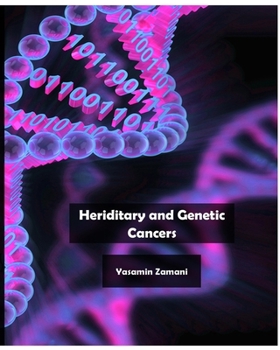
Heriditary and Genetic Cancers
No Customer Reviews

The human body has more than one hundred trillion cells. Except for red blood cells, all cells in the body have a nucleus that contains genetic or hereditary substance. Each somatic cell in the body has 46 chromosomes that carry millions of genes. These active genes make about 400,000 types of proteins in the body that are present in the body in the form of proteins, enzymes, hormones, cytokines, and receptor molecules. These molecular variations cause changes in the appearance and inside the human body.Cancer is not a single disease, but a name used to describe the pathogenic forms of neoplasia. Neoplasia is a type of disease process that is characterized with uncontrolled cell proliferation that result in a mass or tumor. However, in order for a tumor (neoplasm) to be considered a cancer, it must also be malignant, meaning that its growth is no longer controllable and the tumor is able to invade nearby tissues or spreading to more remote areas or both.Cancer occurs when the division and proliferation of cells in a part of the body gets out of control. Every day in our body, many of these cells undergo this unbridled division, but we do not get cancer, because our body has many caring mechanisms, so that everything would be under control.There are several reasons that can disrupt the body's control mechanisms against becoming cancerous. Environmental factors such as smoking, harmful radiation, unhealthy foods, are among the factors that can lead to cancer.But that is not all; There are several genetic factors, that variations of them, and inheritance of them, can expose us at risk of cancer.
Format:Paperback
Language:English
ISBN:1638483396
ISBN13:9781638483397
Release Date:April 2021
Publisher:Intl. Business Sibling
Length:132 Pages
Weight:0.83 lbs.
Dimensions:0.3" x 8.0" x 10.0"
Customer Reviews
0 rating
Copyright © 2026 Thriftbooks.com Terms of Use
| Privacy Policy | Do Not
Sell/Share My Personal Information | Cookie Policy | Cookie Preferences | Accessibility Statement
ThriftBooks® and the ThriftBooks® logo are registered trademarks of Thrift Books Global, LLC
ThriftBooks® and the ThriftBooks® logo are registered trademarks of Thrift Books Global, LLC
