


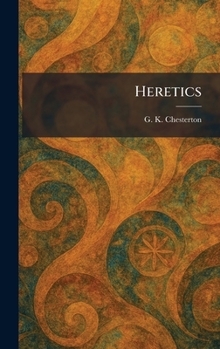
Heretics


Select Format
Select Condition 
Book Overview
"Heretics" is a compelling collection of essays by G.K. Chesterton that explores the importance of maintaining a central philosophy and the dangers of modern intellectual wandering. Chesterton examines the ideas of his contemporaries-including Rudyard Kipling, George Bernard Shaw, and H.G. Wells-to argue that a man's worldview is the most practical and important thing about him. Rather than focusing on abstract dogmas, he demonstrates how even the most "progressive" thinkers of his time were often rooted in inconsistent or nihilistic foundations.
Through his signature wit and masterful use of paradox, Chesterton defends the concept of orthodoxy by exposing the logical fallacies of those who consider themselves above traditional belief. The work covers a wide range of topics, from the nature of Christmas to the flaws in modern journalism and the cult of the "superior person." By challenging the "heretics" of his age, Chesterton crafts a brilliant defense of common sense and the permanent things. "Heretics" remains a cornerstone of 20th-century apologetics and social commentary, offering a sharp-witted critique of the secular age that is as relevant today as when it was first penned.
This work has been selected by scholars as being culturally important, and is part of the knowledge base of civilization as we know it. This work was reproduced from the original artifact, and remains as true to the original work as possible. Therefore, you may see the original copyright references, library stamps (as most of these works have been housed in our most important libraries around the world), and other notations in the work.
This work is in the public domain in the United States of America, and possibly other nations. Within the United States, you may freely copy and distribute this work, as no entity (individual or corporate) has a copyright on the body of the work.
As a reproduction of a historical artifact, this work may contain missing or blurred pages, poor pictures, errant marks, etc. Scholars believe, and we concur, that this work is important enough to be preserved, reproduced, and made generally available to the public. We appreciate your support of the preservation process, and thank you for being an important part of keeping this knowledge alive and relevant.
Related Subjects
Apologetics Fiction Literature & Fiction Philosophy Religion Religion & SpiritualityCustomer Reviews
Early Review
Heretics
An Unorthodox Defense of Orthodoxy
SPARKLING CHESTERTON
ThriftBooks ® and the ThriftBooks ® logo are registered trademarks of Thrift Books Global, LLC
