


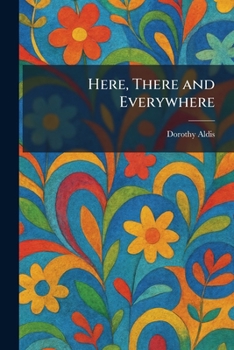
Here, There and Everywhere

Select Format
Select Condition 
Book Overview
"Here, There and Everywhere" is an enchanting collection of verse by Dorothy Aldis, capturing the simple joys and imaginative world of childhood. Through whimsical and rhythmic poems, the author explores the everyday experiences of young children-from the wonders of the natural world to the small details of domestic life.
Aldis's poetry is celebrated for its ability to speak directly to children in a voice that is both relatable and timeless, mirroring the curiosity and playfulness of early youth. This collection remains a classic example of early 20th-century American children's literature, offering rhythmic stanzas that are perfect for reading aloud to young audiences. The themes of discovery, family, and the magic found in mundane moments make "Here, There and Everywhere" a gentle and enduring contribution to the genre of juvenile poetry.
The work serves as a charming reflection of a child's perspective, where even the smallest event can become a grand adventure. This collection highlights Aldis's mastery of simple language to evoke profound feelings of nostalgia and wonder, solidifying its place as a beloved staple for readers and collectors of classic children's verse.
This work has been selected by scholars as being culturally important, and is part of the knowledge base of civilization as we know it. This work was reproduced from the original artifact, and remains as true to the original work as possible. Therefore, you may see the original copyright references, library stamps (as most of these works have been housed in our most important libraries around the world), and other notations in the work.
This work is in the public domain in the United States of America, and possibly other nations. Within the United States, you may freely copy and distribute this work, as no entity (individual or corporate) has a copyright on the body of the work.
As a reproduction of a historical artifact, this work may contain missing or blurred pages, poor pictures, errant marks, etc. Scholars believe, and we concur, that this work is important enough to be preserved, reproduced, and made generally available to the public. We appreciate your support of the preservation process, and thank you for being an important part of keeping this knowledge alive and relevant.
Customer Reviews
ThriftBooks ® and the ThriftBooks ® logo are registered trademarks of Thrift Books Global, LLC
