


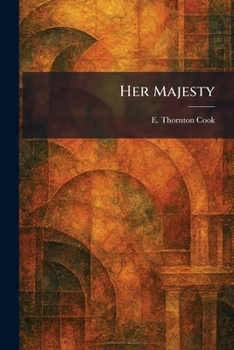
Her Majesty

"Her Majesty" is a comprehensive and engaging collective biography that chronicles the lives of the Queens of Great Britain, spanning from the Norman Conquest in 1066 through to the early 20th century. E. Thornton Cook provides a detailed narrative of the women who occupied the throne, whether as queens regnant who wielded sovereign power or as consorts who influenced the course of the nation from behind the scenes.
The work offers a rich tapestry of history, exploring the personal struggles, political triumphs, and cultural legacies of these royal figures. From the medieval period through the Tudor and Stuart dynasties to the Victorian era, the author examines how these women navigated the complexities of court life and the shifting expectations of the British monarchy. By focusing on their individual characters and the specific challenges they faced, the book brings to life the human element of the crown.
Researched with a keen eye for historical detail, "Her Majesty" serves as an insightful exploration of the evolving role of women in leadership and the enduring influence of the British royal family. It is a vital resource for readers interested in British history, biography, and the historical development of the United Kingdom's most iconic institution.
This work has been selected by scholars as being culturally important, and is part of the knowledge base of civilization as we know it. This work was reproduced from the original artifact, and remains as true to the original work as possible. Therefore, you may see the original copyright references, library stamps (as most of these works have been housed in our most important libraries around the world), and other notations in the work.
This work is in the public domain in the United States of America, and possibly other nations. Within the United States, you may freely copy and distribute this work, as no entity (individual or corporate) has a copyright on the body of the work.
As a reproduction of a historical artifact, this work may contain missing or blurred pages, poor pictures, errant marks, etc. Scholars believe, and we concur, that this work is important enough to be preserved, reproduced, and made generally available to the public. We appreciate your support of the preservation process, and thank you for being an important part of keeping this knowledge alive and relevant.
Customer Reviews
ThriftBooks ® and the ThriftBooks ® logo are registered trademarks of Thrift Books Global, LLC
