


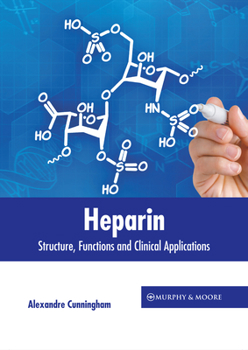
Heparin: Structure, Functions and Clinical Applications
No Customer Reviews

Heparin refers to a naturally occurring glycosaminoglycan which is used as a type of drug. These drugs are classified as anticoagulants since they rely on the activity of antithrombin. Heparin is primarily utilized to treat unstable angina and heart attacks. It is administered through injection into a vein under the skin. Its other applications include usage in kidney dialysis machines and inside test tubes. It is an unfractionated mixture of various partially sulfated polymers of different carbohydrates such as D-glucosamine, L-iduronic acid, 2-acetamido-2-deoxy-D-glucose, D-glucuronic acid, and 2-deoxy-2-sulfamino-D-glucose. Heparin chains are diverse in size and include both N- and O-sulfation and N-acetylation patterns, due to the complex biosynthesis process and unpredictability of animal species and tissues. This book provides comprehensive insights into the structure, functions and clinical applications of heparin. It aims to serve as a resource guide for students and experts alike.
Format:Hardcover
Language:English
ISBN:1639877827
ISBN13:9781639877829
Release Date:September 2023
Publisher:Murphy & Moore Publishing
Length:251 Pages
Weight:1.93 lbs.
Dimensions:0.6" x 8.5" x 11.0"
Customer Reviews
0 rating
Copyright © 2025 Thriftbooks.com
Terms of Use | Privacy Policy | Do Not Sell/Share My Personal Information | Cookie Policy | Cookie Preferences | Accessibility Statement
ThriftBooks ® and the ThriftBooks ® logo are registered trademarks of Thrift Books Global, LLC
ThriftBooks ® and the ThriftBooks ® logo are registered trademarks of Thrift Books Global, LLC
