


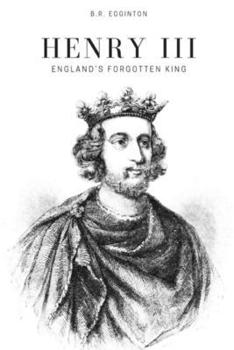
Henry III: England's Forgotten King
No Customer Reviews

Henry III (1207-1272) ruled for fifty-six years, longer than any other English medieval monarch, yet has been largely forgotten by posterity. The same cannot be said for his father, King John, who remains infamous for his tyrannous rule, which led to the collapse of the Angevin Empire, the subjugation of England to the papacy, and the imposition of Magna Carta on the Crown. Henry was just nine years of age when he succeeded his father and inherited a kingdom that was being consumed by civil war. Thanks to the inspiring leadership of his guardian, William Marshal, he emerged victorious in the struggle against his father's rebellious barons and their rival candidate for the throne (the French dauphin), but still faced many challenges. Abroad, England's standing had been severely damaged by the loss of the majority of its continental empire; and at home, Magna Carta had opened a can of worms that would plague Henry's entire reign. Henry was a completely different character to his father, and it would be fair to say that he was a good man but a poor ruler. On the one hand, he was a lover of peace, devoted to his family, and both generous and pious. On the other hand, he had little aptitude for the business of war, managed his finances poorly, committed himself to unwise foreign ventures, and earned the disdain of the native nobility by showering honours and riches on foreign favourites. Thanks to Magna Carta, Henry spent his entire adult reign walking a tightrope. He worked tirelessly to defend the Crown's authority from radical reformers, but took a far less confrontational approach than his father had done, and as a result secured many years of relative peace. However, his shortcomings as a ruler ultimately brought his personal rule crashing down in 1258 and led to yet another civil war near the end of his reign, orchestrated by his son-in-law Simon de Montfort.
Like the civil war at the beginning of his reign, Henry's cause eventually prevailed, although by then he was a frail old man and it was his son and heir - Edward I - who secured the victory. A few years later, Henry died peacefully in the comfort of his own home, which was no small feat in the turbulent age in which he lived. It could be argued that his reign served as a stepping stone - restoring order and unity after the chaotic rule of King John and laying the foundations for England's successes under Edward I. However, it is important to acknowledge that his reign was also a crucial point in history in its own right. Henry's sponsorship of extravagant building projects led to the construction of many architectural masterpieces, including a new and improved Westminster Abbey that is still standing today. And most importantly of all, the significant political changes that took place during his time on the throne led to the birth of Parliament and the beginnings of the system of government used in England (and in countries all over the world) to this day.
Like the civil war at the beginning of his reign, Henry's cause eventually prevailed, although by then he was a frail old man and it was his son and heir - Edward I - who secured the victory. A few years later, Henry died peacefully in the comfort of his own home, which was no small feat in the turbulent age in which he lived. It could be argued that his reign served as a stepping stone - restoring order and unity after the chaotic rule of King John and laying the foundations for England's successes under Edward I. However, it is important to acknowledge that his reign was also a crucial point in history in its own right. Henry's sponsorship of extravagant building projects led to the construction of many architectural masterpieces, including a new and improved Westminster Abbey that is still standing today. And most importantly of all, the significant political changes that took place during his time on the throne led to the birth of Parliament and the beginnings of the system of government used in England (and in countries all over the world) to this day.
Format:Paperback
Language:English
ISBN:B0FPFCKQJ7
ISBN13:9798263216399
Release Date:September 2025
Publisher:Independently Published
Length:418 Pages
Weight:1.23 lbs.
Dimensions:0.8" x 6.0" x 9.0"
Related Subjects
HistoryCustomer Reviews
0 rating
Copyright © 2026 Thriftbooks.com Terms of Use
| Privacy Policy | Do Not
Sell/Share My Personal Information | Cookie Policy | Cookie Preferences | Accessibility Statement
ThriftBooks® and the ThriftBooks® logo are registered trademarks of Thrift Books Global, LLC
ThriftBooks® and the ThriftBooks® logo are registered trademarks of Thrift Books Global, LLC
