


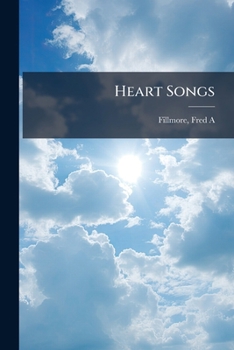
Heart Songs: A New Collection For Sunday Schools

Heart Songs: A New Collection For Sunday Schools, compiled by Fred A. Fillmore, is a treasury of late 19th-century religious music designed to enrich the spiritual lives of young learners. This collection, originally published in 1893, features a diverse array of hymns and songs tailored for use in Sunday schools. The compilation reflects the musical tastes and pedagogical approaches prevalent during that era, offering insight into the religious education of children and adolescents.
"Heart Songs" is more than just a songbook; it is a historical artifact that captures the essence of faith, community, and the importance of music in religious instruction. The selections, carefully chosen and arranged, are intended to uplift, inspire, and educate. For historians, musicologists, and those interested in religious education, this collection provides valuable insights into the cultural and spiritual landscape of the late 19th century. Rediscover the timeless melodies and heartfelt messages of "Heart Songs," a testament to the enduring power of music in nurturing young hearts and minds.
This work has been selected by scholars as being culturally important, and is part of the knowledge base of civilization as we know it. This work was reproduced from the original artifact, and remains as true to the original work as possible. Therefore, you will see the original copyright references, library stamps (as most of these works have been housed in our most important libraries around the world), and other notations in the work.
This work is in the public domain in the United States of America, and possibly other nations. Within the United States, you may freely copy and distribute this work, as no entity (individual or corporate) has a copyright on the body of the work.
As a reproduction of a historical artifact, this work may contain missing or blurred pages, poor pictures, errant marks, etc. Scholars believe, and we concur, that this work is important enough to be preserved, reproduced, and made generally available to the public. We appreciate your support of the preservation process, and thank you for being an important part of keeping this knowledge alive and relevant.
Customer Reviews
ThriftBooks® and the ThriftBooks® logo are registered trademarks of Thrift Books Global, LLC
