
Skip to content
Scan a barcode
Scan
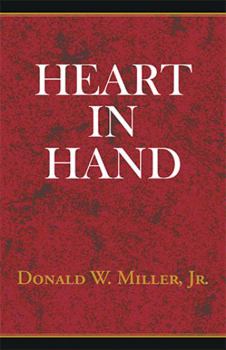
Paperback Heart in Hand Book

ISBN: 0738806692

ISBN13: 9780738806693

Heart in Hand

Select Format

Select Condition ThriftBooks Help Icon

Recommended

Format: Paperback

Condition: New

$21.99
Ships within 2-3 days
Save to List

Book Overview

This book is about the nature of life, as I see it. I offer my reflections on a wide variety of subjects: on sex, death, love, God, and the importance of music, and art in general, in our lives.

I am a heart surgeon. For the last 25 years I have lived in Seattle, practicing and teaching heart surgery at the University of Washington and at Swedish Medical Center. Several things happened during these years that led me to write this book.

First there was an untimely death. My sister Nancy died in 1978 when she was 31 years old, from breast cancer. I was 38 years old at the time.

Then, six years later, I was changing out my scrub clothes in the surgeons locker room after doing a coronary bypass operation on an elderly woman and talking with a surgical colleague, Dr. Alfred Blue, when he happened to notice a mole on my unclothed shoulder. He said, pointing to the mole on my shoulder, how long have you had that thing? Dr. Blue is an outspoken, no nonsense plastic surgeonqualities usually not seen in that breed of physician. I told him that it had been there for awhile and that one of the other surgeons on the staff looked at it a year ago and said that it was nothing to worry about. Dr. Blue said, in his usual blunt fashion, it oughta come off.

He excised it in his office later that afternoon. Much to my surprise, and his, for that matter, it turned out to be cancera malignant melanoma. I went back to his office a few days later and he did a wide excision of the skin, fatty tissue, and lymph nodes around the site under local anesthesia. While he was cutting away a large pizza-sized wedge of skin and subcutaneous tissue from my shoulder, Dr. Blue made a comment that forever after endeared him to me. He said, Im glad youre the one whose got this problem and not me

The reader might think that this statement is a bit crass, an unfeeling thing for a doctor to say to his patient. But I took comfort in what he said and looked at it this way: one does not often encounter such stark honesty in a physician. To me, his being that honest meant that I could fully trust him, no matter what.

All of a sudden, at the age of 44, I had to confront the prospect of an early death, like my sister Nancy and my grandfather, Louis Hicks Williams, had to do. He was a career Navy surgeon. He died at the age of 41 from viral encephalitis, which he contracted in Haiti when he was stationed at a hospital there with the US Marines in the late 1920s. I was in the prime of life, with a successful practice and my second book on heart surgery just published. I had been appointed to the Board of Directors of the Seattle Symphony and was a member of their six-person search committee formed to select a new conductor for the orchestra. This couldnt happen to me. Suddenly, I was faced with the realization that death was not just something that happened to other people, it was also something that was going to happen to me, and perhaps very much sooner than I had ever thought possible.

My sisters breast cancer was diagnosed when she was 26 years old, soon after the birth of her second child. She knew how bad the prognosis wasbreast cancer that arises during pregnancy is highly lethalbut she nevertheless fought it valiantly. She lived five more years, several years longer than any of her physicians thought possible with the kind of cancer that she had. Two years before her death she came to Seattle with her husband and two young daughters and we went on a day hike together on Hurricane Ridge in the Olympic Mountains in Washington State, on what turned out to be a beautiful, warm day.

Although I cherished that time with her, I generally treated my sisters death with denial. My basic approach was dont think about it, go on with your life and it wont bother you too much. I wa

Customer Reviews

4 ratings

From a recent 5-way by-pass patient

Dr Miller told me of his book, and as I was so impressed with him as a person and a surgeon, it was the first book I read during my recovery. Even though I was still on pain killers when I started, I couldn't put it down, staying awake longer than I should have each night.I heartily agree with the first two reviews written before mine, and will let them stand as my views also.To unwind from his work, Dr. Miller told me he that on Saturdays he frequently gets an intellectually stimulating book on tape, and then takes his dog for an all day hike in the Cascade Mountains (near Seattle) while he listens to the book. This gives me the thought that he really is a renaissance man. Pain killers aside, I thought the whole theme falls together for you during the last few pages. You may wonder as you go along as to how it all falls together. He does not disappoint you at the end.I felt it was one of the best books I have ever read.

Will Enrich Your Life

Suspend all your usual stereotypes about insensitive or materialistic surgeons! Donald W Miller, a cardiac surgeon, is a most knowledgeable, sincere, and deep thinker who has contributed a monumental work of art to our human quest for understanding. Heart in Hand is a wonderful gift, especially in this Information Age where true meaning and personal significance are often lost to Moore's Law and the next Microsoft takeover. Miller's exhaustive reflections on the nature of life are backed by solid scientific evidence, intuition, and a passionate appreciation for philosophy (especially that of Arthur Schopenhauer), Woody Allen movies, classical music, biology, and mystical experience. Although it seems almost impossible to integrate these diverse resources into only 213 pages of text, Miller does it brilliantly, adhering to his own message in the book that simplicity is a virtue. Examples of simplicity he provides include the guileless but compassionate fool of Danny in Woody Allen's Broadway Danny Rose, and the ageless simplicity found in the immortal music of the Beatles and Theolonious Monk. Heart in Hand helps us realize that we are all deeply interconnected. All matter in the universe is comprised of leptons and quarks, force is really the same as substance, and we are all products of the big bang. He advocates for scientific and analytical thinking, but admits to the limits of this approach and suggests a need for mysticism and intuitive understanding too. However, don't mistake Miller's openness to mysticism as an endorsement of Western religion. Probing questions about religion will raise many ecclesiastic eyebrows, and he may get tossed out of a few churches! For example, he doubts that we have souls if we evolved from bacteria, and describes the secret and cunning of priests as "pretending to possess the means to satisfy mans great metaphysical need by saying that the great riddle has reached them direct." His deep sincerity and honesty is evident, and his description of Schopenhauer's writings on morality is a good primer for many supposedly good religious folk who are actually more instrumental in separating the human race through judgemental thinking than encouraging true compassion. This grand integration of multiple dimensions of science and art succeeds on many levels. This is a technical book with tons of useful information on biology, history, art, and even sex, and Miller shares many personal preferences for future reading and listening. This is also a very fun book that celebrates life while standing on the shoulders of many significant and creative minds. You may want to read Heart in Hand multiple times, and will surely come away with new insights and pleasure every time. There are still many questions unanswered. What happened before the big bang? Could there still be a personal God? Is there a personal purpose for each person during this brief planetary residence?

Heart In Hand

If one has trepidations about mortality, then Dr. Donald Miller may assuage his and her misgivings. His book, Heart In Hand, however, is not just about death and dying, it is about life and living. Indeed, Dr. Miller traces the beginning of life to the one-celled amoeba and carries it forward to man in its highest form, most notably, as defined by Arthur Schopenhauer, Richard Wagner, and Woody Allen. He also makes several references to himself, his family, his friends, and his patients.He no doubt has spent sleepless nights in Seattle as a heart surgeon, and in the process, has much time to think about six facets of life, each one represented by a chapter in his book. While it may be unusual for one to cross the divide between Schopenhauer and Allen, one sees where the two are not far apart, except by 147 years between birth, and the book is filled with quotations of both, which are treats, and saves one from the tedium of heavy reading, especially Schopenhauer; all of this in just 213 pages of text, with additional endnotes, reading and film selections.Dr. Miller's explanation of evolution has condensed the so-called theory into very interesting and coherent facts, and could be a primer for teachers. There are also many other facts that could be described as interesting trivia. And his explanation of sex, and indeed, compassion, touches the sensibilities. His chapters, "Searching for God," and the "Metaphysics of Music" are engrossing. But the chapter "Confronting Death" should get to core of everyone's being. Of course, death is inevitable, and when one is born, every day he and she creeps one day closer. But knowing it doesn't help. And for many, it is a perplexing and often debilitating experience. Dr. Miller enlightens us with one quotation from Schopenhauer, "Where was I before my birth?" "For it is irrefutably certain that non-existence after death cannot be different from non-existence before birth..." If one is hesitant to confront any of the volumes that have been written to assuage our fear of death, this chapter is enough. It takes us there without cringing, and with a simple but plausible explanation.It is Schopenhauer and Woody Allen who are the main players in this book. Unless one has read the older philosopher, probably in his most important work, "The World as Will and Representation," and "Essays and Aphorisms," a compilation selected and translated by R. J.. Hollingdale, much has been missed about his views about compassion, living and dying. Likewise, unless one has analyzed the films of Woody Allen, and assumes that he is more than a comedian, then Dr. Miller shows where he is a deep thinker, and very preoccupied with death, which is made light through his comedy, but has a very serious and obvious cognizance. Dr. Miller is generous in his observations about Schopenhauer, Allen, and finally Richard Wagner, who was immensely influenced by the philosopher and his above

Heart In Hand

If you liked THE POWER OF MYTH, the PBS TV series/book of Joseph Campbell interviews by Bill Moyers, you will be captivated by HEART IN HAND. Joseph Campbell tells us how religions and myths from many cultures are, essentially, one variegated story of humankind's spiritual journey. Dr. Miller, in a most readable prose style, takes current knowledge from many scientific fields--medicine, astronomy, biology, quantum physics--and relates it to philopsophy, humor, religion, and the arts, particularly music.When he describes his book as 'reflections on the nature of life,' don't jump out of your easy chair. This book is the opposite of pompous. In our so called Information Age, it is hard as hell to get a grip on what we are really doing on the planet at the end of this tumultuous century. This book helps. Dr. Miller offers the layman, like myself, a science lesson and then shows how the intricate facts of the physical world relate to the domain of the soul. For one who is uncertain about what evolution means, he gives a telling explanation in terms of genes--ours and those of our ancestors. He draws from his extensive personal interests--microbiology, sex, opera, jazz, Arthur Schopenhauer, conducting a symphony orchestra, Jack Kerouac, Richard Wagner, Thelonious Monk, compassion in the practice of medicine, Woody Allen, God, and death--and translates them into integral meditations about what it is to be alive. As he goes along, he connects things, a lot of things. Joseph Campbell describes our mythological exit from the Garden of Eden as moving from unity with God/Eternity into a world of opposites/duality, man/woman, and mortality. Microbiology informs us that single-cell bacteria clone asexually and keep reproducing ad-infinitum, as long as they have a favorable environment. Death, in evolutionary terms, is not part of the 'program' until these little bits of life evolve far enough to reproduce sexually. This eventually occurs in more advanced single-cell organisms called eukaryotes that exchange and commingle their genetic DNA to produce genetically new offspring. These ancient ancestors also reside East of Eden, genetically programmed to 'senescence and eventual death.'This is a highly personal and diverse choice of subject matter. If it were not, he would have written a rather eccentric textbook. Because he cares deeply, and has cared for a long time, about what is beneath the surface of things, this is an exceptional and valuable book by an unusually curious man. Dr. Miller is a wonder in his ability to concisely reveal so much useful information in a little over two hundred pages. He is completely honest in telling us what science knows and does not know. From his practice of medicine he offers convincing evidence of how our emotions and moral choices profoundly influence our physical health. He neither preaches nor does he attempt to dispel the mystery of existence. To the contrary, the
Copyright © 2026 Thriftbooks.com Terms of Use | Privacy Policy | Do Not Sell/Share My Personal Information | Cookie Policy | Cookie Preferences | Accessibility Statement
ThriftBooks® and the ThriftBooks® logo are registered trademarks of Thrift Books Global, LLC

GoDaddy Verified and Secured