


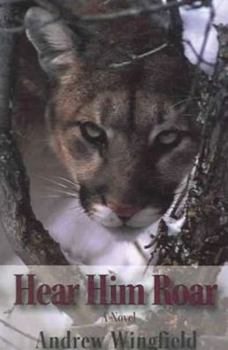
Hear Him Roar: A Novel


A cougar attacks a jogger in the suburbs of a Western city. Charlie Sayers, a wildlife biologist facing retirement, is drawninto the search for the lion. He gets caught up in the conflict between... This description may be from another edition of this product.
Format:Paperback
Language:English
ISBN:087421615X
ISBN13:9780874216158
Release Date:July 2005
Publisher:Utah State University Press
Length:240 Pages
Weight:0.75 lbs.
Dimensions:9.0" x 0.7" x 6.0"
Customer Reviews
2 ratings
A great read for anyone
Published by Thriftbooks.com User , 19 years ago
This novel is well written and captures the reader from the beginning to the very end. Whether you are a nature-lover or a person who simply wants to read a thought-provoking book, this is an excellent read. "Hear Him Roar" not only makes the reader think about issues regarding the balance between humans and nature, but also follows the transformation of Charlie Sayers as he learns what life means to him. The descriptions of the landscape paint a clear picture of the California setting and draw the reader into the beauty of nature. I recommend this novel to anyone who has an interest in nature or a desire to learn more about the delicate balance of our lives.
Predatory Natures
Published by Thriftbooks.com User , 20 years ago
CharlieSayers, the narrator of Hear Him Roar by Andrew Wingfield, is recently retired, reluctantly occupied with a sense of mortality, and gradually consumed by the predatory aspects of nature that come into focus for him when a cougar kills a female jogger in the suburban foothills of the Sierra mountains of California. The novel's subject is a confluence of place and character -the mauled woman and Charlie's own haunted, remorseful conscience. A deeply ironic parallel exists between the lactating cougar stealthily protecting its newborn and the moribund Sayers raging against his failure to protect his son from self-immolation. The innocent predator without and the guilty predator within. Supported by caring women and touched by his daughter's guru-mentor, Sayers slowly begins to see the connection between this ghostly cougar and his own impotent anger against mortality as he struggles with the recurring memories of the son he and his wife drove to an untimely death in the frozen bosom of the Sierra mountains. Together they had thrown the boy's identity into doubt and seeded a fatal passion to prove himself worthy. There is less dimension to the women in the novel. They are less embattled. The sacrificial son and the matriarchal jogger who fought for her life so that her children would remember her well both dissolve fitfully into memory, to be retrieved only by the vision and the words of Charlie Sayers. As a young father he had rejected his son's attempts to engage him in loving play which could have renewed his moribund spirit and healed the pain of his own orphaned childhood. Instead, he steeled the cruelty he had so bitterly learned and unleashed it on the apostolic son now in his care. The conflict implicit in this re-enactment of his own childhood is put to rest in his understanding the meaning of the jogger's death: "That woman died and I had come more fully to life. It didn't seem fair, but what could I do." That is the story he must tell, and in its telling does he begin to heal. stephen karpowitz phd
Copyright © 2026 Thriftbooks.com Terms of Use
| Privacy Policy | Do Not
Sell/Share My Personal Information | Cookie Policy | Cookie Preferences | Accessibility Statement
ThriftBooks® and the ThriftBooks® logo are registered trademarks of Thrift Books Global, LLC
ThriftBooks® and the ThriftBooks® logo are registered trademarks of Thrift Books Global, LLC
