


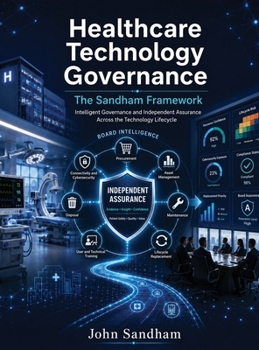
Healthcare Technology Governance: The Sandham Framework

Healthcare organisations depend on increasingly complex networks of medical devices, digital systems, software, infrastructure and specialist engineering services. Yet responsibility for governing these technologies is often fragmented across clinical, technical, financial, procurement, information technology and executive functions.
Healthcare Technology Governance: The Sandham Framework presents a structured approach to managing this complexity. It explains why maintenance compliance and operational performance measures alone cannot provide sufficient confidence that healthcare technology risks are being identified, controlled and escalated effectively.
The book introduces the Sandham Framework, a systems-based model that connects operational management, organisational governance and independent assurance. It examines the full healthcare technology lifecycle through seven interdependent domains: procurement, asset management, maintenance, lifecycle replacement, user and technical training, disposal, and connectivity and cybersecurity.
Rather than treating each domain as a separate technical activity, the framework shows how weaknesses can combine to create systemic risk. It also explains how fragmented evidence, unclear accountability and excessive reliance on compliance indicators can produce an illusion of assurance.
A five-level maturity model, progressing from Reactive to Intelligent, helps organisations assess how effectively they govern healthcare technology and identify the capabilities required for improvement. The book also explores the role of the Authorising Engineer (Medical Engineering), or AE(ME), as an independent source of strategic assurance to healthcare boards and senior leaders.
Written for healthcare executives, clinical and medical engineers, governance professionals, regulators, policymakers and academics, this book provides a practical foundation for strengthening accountability, improving decision-making and developing safer, more resilient and intelligent healthcare organisations.
It is not simply a book about managing medical equipment. It is a framework for ensuring that confidence in healthcare technology is supported by evidence, independent challenge and effective governance.
Customer Reviews
ThriftBooks ® and the ThriftBooks ® logo are registered trademarks of Thrift Books Global, LLC
