


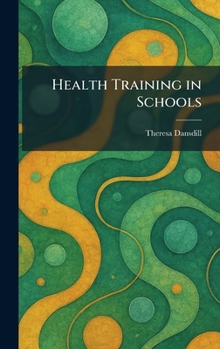
Health Training in Schools

"Health Training in Schools" by Theresa Dansdill is an extensive and practical guide designed to integrate wellness and hygiene into the daily curriculum of the American school system. Written during a pivotal era for public health, this work provides educators with a comprehensive framework for teaching children the fundamentals of physical well-being, nutrition, and personal care. The text is structured as a manual, offering a diverse collection of stories, lesson plans, and classroom activities that transform abstract health concepts into engaging and actionable habits.
Dansdill emphasizes the proactive role of schools in fostering child welfare, covering essential topics such as dental hygiene, posture, clean air, and the prevention of communicable diseases. By focusing on the development of the whole child, the work argues that health is a foundational element of academic and social success. "Health Training in Schools" stands as a significant historical document in the evolution of physical education and school hygiene, reflecting the early 20th-century commitment to improving the lives of children through structured health instruction and community awareness.
This work has been selected by scholars as being culturally important, and is part of the knowledge base of civilization as we know it. This work was reproduced from the original artifact, and remains as true to the original work as possible. Therefore, you may see the original copyright references, library stamps (as most of these works have been housed in our most important libraries around the world), and other notations in the work.
This work is in the public domain in the United States of America, and possibly other nations. Within the United States, you may freely copy and distribute this work, as no entity (individual or corporate) has a copyright on the body of the work.
As a reproduction of a historical artifact, this work may contain missing or blurred pages, poor pictures, errant marks, etc. Scholars believe, and we concur, that this work is important enough to be preserved, reproduced, and made generally available to the public. We appreciate your support of the preservation process, and thank you for being an important part of keeping this knowledge alive and relevant.
Customer Reviews
ThriftBooks ® and the ThriftBooks ® logo are registered trademarks of Thrift Books Global, LLC
