


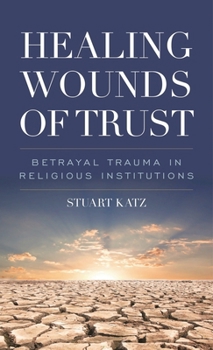
Healing Wounds of Trust: Betrayal Trauma in Religious Institutions
No Customer Reviews

Evidence-based investigation into the mechanics of spiritual abuse and institutional betrayal, providing a new multidisciplinary framework for diagnosing, treating, and preventing religious trauma.
Bridging the gap between clinical psychology, trauma studies, and institutional ethics, this guide analyzes how sacred spaces can be weaponized to inflict deep psychological harm. Grounded in original qualitative research and featuring dozens of in-depth interviews with survivors across diverse faith traditions, the book exposes the specific systemic structures that permit abuse to occur and go unaddressed within religious organizations. It maps out the unique psychological anatomy of "betrayal trauma"-detailing how the violation of spiritual trust fractures an individual's cognitive, emotional, and social safety nets. Katz meticulously unpacks the intersection of moral injury and cognitive dissonance, highlighting the profound disorientation that occurs when spiritual authorities become perpetrators. It further examines the isolating complexities of leaving high-control religious environments, offering a critical analysis of the ways doctrine is often manipulated to enforce silence and compliance.Rather than treating religious trauma as an isolated clinical issue, the text demonstrates why systemic reform is inseparable from individual healing. It offers a crucial roadmap for moving organizations from reactive crisis management toward proactive, trauma-informed institutional accountability. For the broader field, this work introduces vital, survivor-centered methodologies and clinical intervention strategies that reshape how mental health professionals and academic researchers analyze spiritual wounds. By detailing both the clinical pathways to recovery and the structural pathways to institutional reform, Healing Wounds of Trust offers an indispensable toolkit. It equips readers with the practical and theoretical resources needed to dismantle abusive dynamics, support survivors through complex recovery, and build genuinely safe, accountable communities.
Format:Paperback
Language:English
ISBN:B0H1XGGBWF
ISBN13:9798216380320
Release Date:June 2027
Publisher:Bloomsbury Academic
Length:176 Pages
Weight:1.00 lbs.
Dimensions:1.0" x 5.5" x 8.5"
Customer Reviews
0 rating
Copyright © 2026 Thriftbooks.com
Terms of Use | Privacy Policy | Do Not Sell/Share My Personal Information | Cookie Policy | Cookie Preferences | Accessibility Statement
ThriftBooks ® and the ThriftBooks ® logo are registered trademarks of Thrift Books Global, LLC
ThriftBooks ® and the ThriftBooks ® logo are registered trademarks of Thrift Books Global, LLC
