


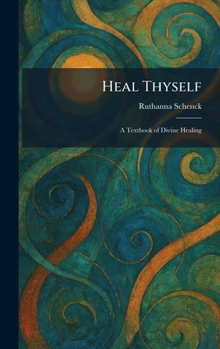
Heal Thyself: A Textbook of Divine Healing

"Heal Thyself: A Textbook of Divine Healing" is a profound exploration of the spiritual principles behind physical and mental restoration. Written by Ruthanna Schenck, this work serves as a comprehensive guide for individuals seeking to harness the power of faith and divine intervention in their personal health journeys. The text delves into the philosophical and practical aspects of spiritual healing, emphasizing the connection between the mind, the spirit, and the body's natural capacity for recovery when aligned with divine will.
Through clear instructions and inspirational insights, Schenck outlines a path toward holistic well-being that transcends conventional medical approaches. The book addresses the importance of prayer, positive affirmation, and the cultivation of a peaceful inner state as essential components of the healing process. It serves not only as a manual for those suffering from illness but also as a spiritual roadmap for anyone looking to deepen their understanding of divine grace and the metaphysical laws of health.
As a significant contribution to early 20th-century spiritual literature, "Heal Thyself: A Textbook of Divine Healing" remains a valuable resource for students of New Thought and various schools of spiritual medicine. Its timeless message of hope and self-empowerment continues to resonate with those searching for harmony and wholeness in an increasingly complex world.
This work has been selected by scholars as being culturally important, and is part of the knowledge base of civilization as we know it. This work was reproduced from the original artifact, and remains as true to the original work as possible. Therefore, you may see the original copyright references, library stamps (as most of these works have been housed in our most important libraries around the world), and other notations in the work.
This work is in the public domain in the United States of America, and possibly other nations. Within the United States, you may freely copy and distribute this work, as no entity (individual or corporate) has a copyright on the body of the work.
As a reproduction of a historical artifact, this work may contain missing or blurred pages, poor pictures, errant marks, etc. Scholars believe, and we concur, that this work is important enough to be preserved, reproduced, and made generally available to the public. We appreciate your support of the preservation process, and thank you for being an important part of keeping this knowledge alive and relevant.
Customer Reviews
ThriftBooks ® and the ThriftBooks ® logo are registered trademarks of Thrift Books Global, LLC
