
Skip to content
Scan a barcode
Scan
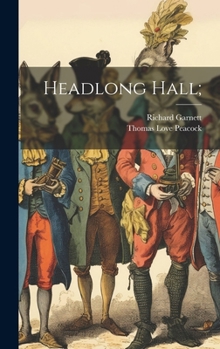
Paperback Headlong Hall; Book

ISBN: 1021464902

ISBN13: 9781021464903

Headlong Hall;

Select Format

Select Condition ThriftBooks Help Icon

Recommended

Format: Paperback

Condition: New

$20.96
Ships within 2-3 days
Save to List

Book Overview

This tongue-in-cheek satire of English society and intellectual life is a classic of the genre. Written by Romantic poet and scholar Thomas Love Peacock, Headlong Hall skewers the pretensions and absurdities of the upper classes with wit and irreverence. With an introduction by Richard Garnett, this edition is a must-read for fans of 19th-century literature.

This work has been selected by scholars as being culturally important, and is part of the knowledge base of civilization as we know it.

This work is in the "public domain in the United States of America, and possibly other nations. Within the United States, you may freely copy and distribute this work, as no entity (individual or corporate) has a copyright on the body of the work.

Scholars believe, and we concur, that this work is important enough to be preserved, reproduced, and made generally available to the public. We appreciate your support of the preservation process, and thank you for being an important part of keeping this knowledge alive and relevant.

Customer Reviews

2 ratings

A satire for those who don't like satires

Headlong Hall, an almost 200-year-old satire by Thomas Love Peacock, is the name of the ancestral home of the Headlongs, Welsh gentry of ample means and some intellectual ambition. Squire Headlong has invited a slice of the English beau monde for a country house party. The guests typify popular and competing philosophies of the day: the man who thinks life is a constant process of improvement, his hell-in-a-handbasket opposite, mister status-quo, a minister committed to religious conviction but not action; and a variety of others. The action is a slapstick device for gently but firmly skewering the fashionable intellectual pretensions of the day, most of which are equally at home in the 21st Century. The landscape architect, a novelty in 1815, can easily be replaced with any zealous enthusiast of today. The only real surprise I found was the comparative youth of the characters; but in a time before antibiotics seriousness came early in life. The writing is typical of the time and will seem stilted to the modern reader; but if you are comfortable with Jane Austen, you will have no trouble with Mr. Peacock, although I did need a dictionary at hand. As with most satires, it is a pleasantly short confection, only about 80 pages; and the footnotes are a joke unto themselves.

Early 19th-century satire at its most erudite and witty

I daresay that no less a personage than Destiny herself foresaw to introduce me to the works of Thomas Love Peacock. While perusing the stacks of English Literature holdings at my library, I literally bumped into this book with my elbow, saw that it was misshelved, and also noticed the fact that Ray Bradbury had seen fit to write an introduction to it. How could I not examine this little book, given such circumstances? It proved to be a most fortuitous meeting, as I quite enjoyed my short adventure at Headlong Hall. Peacock, it seems, was a venerable man of letters, a man of great wit and fancy who catered not to the popular imagination but principally produced works of prose and poetry for those of a scholarly, even antiquarian, mind. Headlong Hall, first published anonymously in 1816, is the first of Peacock's several novels; the book exists not so much to tell a story as to engage in discourses upon a myriad of subjects with something of a satirical air. Seeing as how Peacock wrote during the first half of the nineteenth century, some of his satirical passages relate to politics and social thinking I am wholly unfamiliar with in this day and age, but there remains plenty to delight those who love a good display of sagacity. Peacock could not only pontificate about all manner of subjects, he could land jibes from both directions upon the lot of them. There is a taste of Plato in his delineations of philosophical debates, yet the entire pageantry of pedantry found in Headlong Hall is always tempered by the affability of the host (Squire Headlong) and the liberal distribution of spirits among all parties. Don't expect to fall in love with any of the book's characters or engage your emotions to any significant degree (despite Peacock's insertion of a modicum of romance) with the story, for this is a book of ideas as represented by somewhat satirical characters. What you have in Headlong Hall is a gathering of intellectuals by Squire Headlong, who has developed a desire to be seen as a man of taste. He seems to enjoy nothing better than a spirited debate among the learned - he doesn't really care what anyone has to say, though. Everyone gets to talk, and it doesn't really matter that no one actually listens because the parties involved consist predominantly of the types of men who enjoy hearing themselves talk in the first place. By way of example, you have Mr. Foster, a "perfectabilian" who extols the wonders of progress in the world, and Mr. Escot, a "deteriorationist" who lauds the goodness of the "natural" man, impugns progress at every turn, and basically consigns all of mankind to the compost heap of history. In between these two, there is Mr. Jenkinson, a "statu-quo-ite" who finds balance in everything. There are other parties joining in the fun, including a scattering of writers and critics, but those aforementioned afford one a good sense of the story's nature. It's amazing to see a writer argue opposite sides of any gi
Copyright © 2026 Thriftbooks.com Terms of Use | Privacy Policy | Do Not Sell/Share My Personal Information | Cookie Policy | Cookie Preferences | Accessibility Statement
ThriftBooks® and the ThriftBooks® logo are registered trademarks of Thrift Books Global, LLC

GoDaddy Verified and Secured