


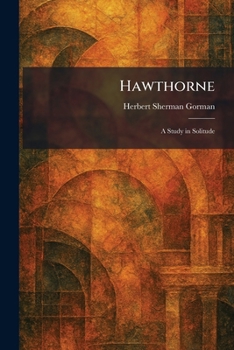
Hawthorne: A Study in Solitude

Select Format
Select Condition 
Book Overview
"Hawthorne: A Study in Solitude" provides a compelling and atmospheric exploration of the life and psyche of Nathaniel Hawthorne, one of the most significant figures in American literature. Written by Herbert Sherman Gorman, this biographical study examines the profound sense of isolation that characterized Hawthorne's existence and served as the primary catalyst for his creative output. By focusing on the theme of solitude, Gorman offers readers a window into the inner world of a man who grappled with the shadows of his Puritan ancestry and the complexities of the human heart.
The work meticulously traces Hawthorne's development as a writer, from his early years of seclusion in Salem to his eventual emergence as a central figure of the American Renaissance. Gorman analyzes how Hawthorne's personal detachment influenced the somber themes of sin, guilt, and moral ambiguity found in masterpieces such as "The Scarlet Letter" and "The House of the Seven Gables." This study goes beyond mere chronology, offering a nuanced interpretation of Hawthorne's character and his interactions with contemporaries like Ralph Waldo Emerson and Herman Melville. As a thoughtful piece of literary criticism, this volume remains a valuable resource for those seeking to understand the dark, contemplative spirit that defined Hawthorne's enduring legacy in the Gothic tradition.
This work has been selected by scholars as being culturally important, and is part of the knowledge base of civilization as we know it. This work was reproduced from the original artifact, and remains as true to the original work as possible. Therefore, you may see the original copyright references, library stamps (as most of these works have been housed in our most important libraries around the world), and other notations in the work.
This work is in the public domain in the United States of America, and possibly other nations. Within the United States, you may freely copy and distribute this work, as no entity (individual or corporate) has a copyright on the body of the work.
As a reproduction of a historical artifact, this work may contain missing or blurred pages, poor pictures, errant marks, etc. Scholars believe, and we concur, that this work is important enough to be preserved, reproduced, and made generally available to the public. We appreciate your support of the preservation process, and thank you for being an important part of keeping this knowledge alive and relevant.
Customer Reviews
ThriftBooks ® and the ThriftBooks ® logo are registered trademarks of Thrift Books Global, LLC
