


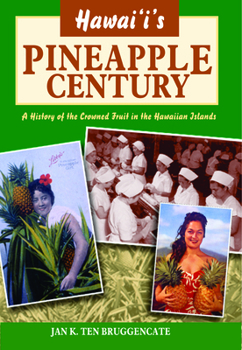
Hawaiis Pineapple Century


Select Format
Select Condition 
Book Overview
Pineapple was not native to the Hawaiian Islands, yet it dramatically changed Hawai'i's landscape and society and helped to build the foundations on which modern Hawai'i now stands. Hawaii's Pineapple Century chronicles the growth of this fascinating, unique, and significant industry by documenting the development of the "crowned fruit" into an icon of the Hawaiian Islands. This illuminating history of Hawaii's pineapple industry explores the early pioneer companies, the effects of international competition, the exodus of local canning and the emphasis on fresh fruit, and includes a section on how to grow pineapple in your own garden.
Format:Paperback
Language:English
ISBN:1566476674
ISBN13:9781566476676
Release Date:October 2004
Publisher:Mutual Publishing
Length:144 Pages
Weight:0.90 lbs.
Related Subjects
HistoryCustomer Reviews
1 rating
Crowning the king of tropical fruits
Published by Thriftbooks.com User , 19 years ago
During the century that sugar was king in Hawaii, cane was not the symbol of the islands. Sugar is fungible. It says nothing to the cook about whether it originated as cane on Maui or beet in Colorado. Pineapple, second in importance by the measures of acreage, jobs and income, was first in association with the islands. Pine was "exotic but not too exotic," in the words of Jan Ten Bruggencate, who was a pine researcher on Molokai until the plantations there closed. Pineapple not only had the looks, but in canned form it was plentiful, cheap and adaptable to the kind of cooking that Mainlanders were familiar with. It was also promoted to a fare-thee-well. Perusing old cookbooks, the preponderance of pineapple recipes over, say, canned plums leads to suspicions that pine payola was involved. Present-day pine managers deny any knowledge of such doings, and Ten Bruggencate does not say much about how pine was promoted. A generous and colorful selection of pine labels and a few magazine advertisements are allowed to tell that part of the tale. "Hawai`i's Pineapple Century" is just about right for the person -- local or tourist -- who is mildly interested in the subject, but it is far from a comprehensive history. Even in his own specialty, Ten Bruggencate skips lightly over the field. Pine agronomists and researchers had to deal with pests, second-class soils (because sugar got the best) and mechanization. But the presence of a large (for remote, thinly populated islands), skilled body of scientists had spinoff effects. It was investigators at the Pineapple Research Institute, for example, who identified the C4 pathway of photosynthesis, a fundamental advance in plant physiology. Although Ten Bruggencate, who has worked with pine all over the world, says Hawaii is the best place for its commercial cultivation, it is not native. No one is sure who brought it to Hawaii. By 1854, whalers in Hilo could buy fresh whole fruits for 28 cents -- more than double what Abraham Lincoln was paying for a night's lodging with breakfast and supper about the same time in Illinois. California, once it grew populous, provided a big enough market to make commercial production of fresh fruit a reasonable proposition. Canning came later, helped along by two innovations: canning the pieces in their own juice instead of water, and the Ginaca machine that trimmed and cored fruits to the point where only minor hand trimming was required. It was Hawaii plungers, of which James Dole was the most famous, who created the worldwide pine business. In 1942, 83 percent of the world's commercial pine came from Hawaii. Today, the cannery in Kahului, though important to Maui, represents less than one percent of world production. It is the last pineapple cannery in America. The United State today cans even less pineapple than Belgium. Ten Bruggencate does not say where Belgian canneries get their fruit. Pine has survived better than cane, though, thanks to a switch back to shipments for f
Copyright © 2025 Thriftbooks.com
Terms of Use | Privacy Policy | Do Not Sell/Share My Personal Information | Cookie Policy | Cookie Preferences | Accessibility Statement
ThriftBooks ® and the ThriftBooks ® logo are registered trademarks of Thrift Books Global, LLC
ThriftBooks ® and the ThriftBooks ® logo are registered trademarks of Thrift Books Global, LLC
