


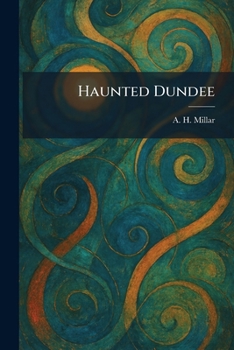
Haunted Dundee

"Haunted Dundee" is a compelling exploration of the supernatural lore and eerie traditions associated with the historic Scottish city of Dundee. Written by the esteemed historian A.H. Millar, this work delves into the spectral accounts and legendary figures that have long populated the local imagination. Through a series of detailed narratives, the author examines reported hauntings in ancient residences, public buildings, and the shadowy closes of the city, weaving together historical fact with local superstition.
Millar provides readers with a fascinating look at the folklore of the region, from restless spirits in the Old Steeple to the mysterious occurrences surrounding Dundee's medieval structures. Each chapter serves as both a record of local mythology and a testament to the cultural heritage of Scotland's east coast. As a significant contribution to the study of regional folk-belief, "Haunted Dundee" captures the chilling atmosphere of the city's past, making it an essential read for those interested in the macabre, the mysterious, and the enduring power of urban legends.
This work has been selected by scholars as being culturally important, and is part of the knowledge base of civilization as we know it. This work was reproduced from the original artifact, and remains as true to the original work as possible. Therefore, you may see the original copyright references, library stamps (as most of these works have been housed in our most important libraries around the world), and other notations in the work.
This work is in the public domain in the United States of America, and possibly other nations. Within the United States, you may freely copy and distribute this work, as no entity (individual or corporate) has a copyright on the body of the work.
As a reproduction of a historical artifact, this work may contain missing or blurred pages, poor pictures, errant marks, etc. Scholars believe, and we concur, that this work is important enough to be preserved, reproduced, and made generally available to the public. We appreciate your support of the preservation process, and thank you for being an important part of keeping this knowledge alive and relevant.
Customer Reviews
ThriftBooks ® and the ThriftBooks ® logo are registered trademarks of Thrift Books Global, LLC
