


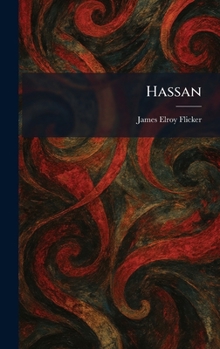
Hassan

"Hassan" is a celebrated verse drama by James Elroy Flecker, subtitled "The Story of Hassan of Baghdad and How he came to Make the Golden Journey to Samarkand." Set in the vibrant and often cruel world of legendary Baghdad during the reign of Caliph Haroun al-Raschid, the play follows the fortunes of Hassan, a humble confectioner with the soul of a poet. His life is irrevocably changed when he falls in love and finds himself caught in the dangerous intrigues and whims of the Caliph's court.
Combining lyrical beauty with grim tragedy, the work explores themes of artistic longing, social injustice, and the pursuit of transcendence. Flecker's mastery of language brings to life the sights, sounds, and scents of the East, contrasting the opulent splendor of the palace with the harsh realities of those who fall from favor. The play is renowned for its haunting final scene, where the pilgrims depart on their spiritual quest through the desert. "Hassan" remains a cornerstone of early 20th-century English dramatic poetry, offering a rich tapestry of fantasy and profound human emotion that continues to resonate with its exploration of the human condition.
This work has been selected by scholars as being culturally important, and is part of the knowledge base of civilization as we know it. This work was reproduced from the original artifact, and remains as true to the original work as possible. Therefore, you may see the original copyright references, library stamps (as most of these works have been housed in our most important libraries around the world), and other notations in the work.
This work is in the public domain in the United States of America, and possibly other nations. Within the United States, you may freely copy and distribute this work, as no entity (individual or corporate) has a copyright on the body of the work.
As a reproduction of a historical artifact, this work may contain missing or blurred pages, poor pictures, errant marks, etc. Scholars believe, and we concur, that this work is important enough to be preserved, reproduced, and made generally available to the public. We appreciate your support of the preservation process, and thank you for being an important part of keeping this knowledge alive and relevant.
Customer Reviews
ThriftBooks ® and the ThriftBooks ® logo are registered trademarks of Thrift Books Global, LLC
