


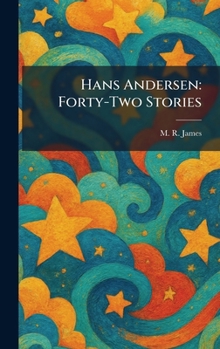
Hans Andersen: Forty-Two Stories

"Hans Andersen: Forty-Two Stories" is a celebrated collection of fairy tales by the Danish master Hans Christian Andersen, translated with meticulous care by the renowned scholar and author M. R. James. This anthology brings together some of the most enduring and beloved narratives in world literature, ranging from the poignant to the whimsical. James, known for his deep appreciation of the supernatural and his mastery of literary prose, sought to capture the true voice of Andersen, aiming to restore the directness, humor, and unique tonal qualities of the original Danish texts.
The volume features forty-two tales, including iconic works such as "The Snow Queen," "The Little Mermaid," and "The Ugly Duckling," as well as lesser-known gems that highlight Andersen's imaginative breadth. Through these stories, readers encounter a rich tapestry of talking animals, magical objects, and profound moral lessons that continue to resonate across generations. This collection stands as a testament to Andersen's literary genius and James's skill as a translator, offering a clear English rendering of these foundational stories. It remains an essential resource for lovers of folklore, classic literature, and the timeless art of storytelling.
This work has been selected by scholars as being culturally important, and is part of the knowledge base of civilization as we know it. This work was reproduced from the original artifact, and remains as true to the original work as possible. Therefore, you may see the original copyright references, library stamps (as most of these works have been housed in our most important libraries around the world), and other notations in the work.
This work is in the public domain in the United States of America, and possibly other nations. Within the United States, you may freely copy and distribute this work, as no entity (individual or corporate) has a copyright on the body of the work.
As a reproduction of a historical artifact, this work may contain missing or blurred pages, poor pictures, errant marks, etc. Scholars believe, and we concur, that this work is important enough to be preserved, reproduced, and made generally available to the public. We appreciate your support of the preservation process, and thank you for being an important part of keeping this knowledge alive and relevant.
Customer Reviews
ThriftBooks ® and the ThriftBooks ® logo are registered trademarks of Thrift Books Global, LLC
