


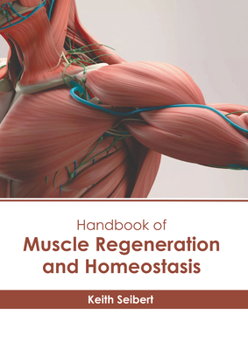
Handbook of Muscle Regeneration and Homeostasis
No Customer Reviews

Homeostasis refers to the ability of an organism to keep the body's internal environment within bounds that enable the organism to survive. Chemical regulation, thermoregulation and osmoregulation are the primary types of homeostatic regulations that occur in the body. Muscle regeneration is the ability of an adult muscle to regenerate damaged fibers and it represents an essential homeostatic function. It is an extremely coordinated program, which partly mimics the embryonic developmental program. It also includes the activation of the muscle compartment of stem cells, specifically satellite cells as well as other precursor cells. The activities of these cells are dependent on environmental signals. Muscle regeneration can be hampered by a number of pathological conditions either because of the increasing loss of stem cell populations or due to the absence of signals that prevent damaged tissues from effectively activating a regenerative program. Thus, it is possible that losing control over these cells will result in pathological cell differentiation. The topics included herein on muscle regeneration and homeostasis is of utmost significance and bound to provide incredible insights to readers. Those in search of information to further their knowledge will be greatly assisted by this book.
Format:Hardcover
Language:English
ISBN:1646475917
ISBN13:9781646475919
Release Date:September 2023
Publisher:Hayle Medical
Length:252 Pages
Weight:1.94 lbs.
Dimensions:0.6" x 8.5" x 11.0"
Customer Reviews
0 rating
Copyright © 2026 Thriftbooks.com Terms of Use
| Privacy Policy | Do Not
Sell/Share My Personal Information | Cookie Policy | Cookie Preferences | Accessibility Statement
ThriftBooks® and the ThriftBooks® logo are registered trademarks of Thrift Books Global, LLC
ThriftBooks® and the ThriftBooks® logo are registered trademarks of Thrift Books Global, LLC
