


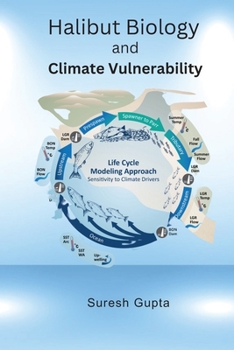
Halibut biology and climate vulnerability

Indian halibut (Psettodes erumei) is a commercially important demersal fish species found in the Indian Ocean,
particularly in the coastal waters of the North Tamilnadu coast. The species has been extensively studied for its biology,
including its distribution, habitat, reproduction, growth rate, age estimation, food habits, trophic level, and ecological niche.
The Indian halibut is an important component of the marine ecosystem and supports the livelihoods of many coastal communities through its commercial fishery.
However, the Indian halibut is also vulnerable to the effects of climate change. Climate change, which includes temperature changes,
ocean acidification, sea level rise, and extreme events, can have significant impacts on the species and its habitat.
Climate change can alter the temperature and chemistry of the water, affecting the reproduction, growth, and survival of the species.
Additionally, climate change can cause habitat loss, range shifts, and alter prey-predator dynamics, which can affect the population dynamics of the Indian halibut.
The vulnerability of the Indian halibut to climate change has important implications for the management and conservation of the species.
Overexploitation of the Indian halibut, coupled with the effects of climate change, can lead to a decline in the population of the species,
with implications for the livelihoods of coastal communities and food security in the region. Therefore, it is important to develop conservation strategies
for the Indian halibut that take into account its biology and vulnerability to climate change.
Such strategies should focus on ecosystem-based management and policy interventions that address the socio-economic impacts of climate change on coastal communities.
Overall, the study of Indian halibut biology and climate vulnerability is important for understanding the ecological and socio-economic impacts
of climate change on marine species and ecosystems. The findings of such studies can inform the development of effective conservation and management strategies
that promote the resilience and sustainability of marine ecosystems and the communities that depend on them.
Related Subjects
Medical Medical Books Science Science & Math Science & Scientists Science & TechnologyCustomer Reviews
ThriftBooks ® and the ThriftBooks ® logo are registered trademarks of Thrift Books Global, LLC
